Sarama Resources (SRR:AU) has announced Initial Exploration Program Completed at Cosmo Gold Project
Download the PDF here.
This post appeared first on investingnews.com


Sarama Resources (SRR:AU) has announced Initial Exploration Program Completed at Cosmo Gold Project
Download the PDF here.
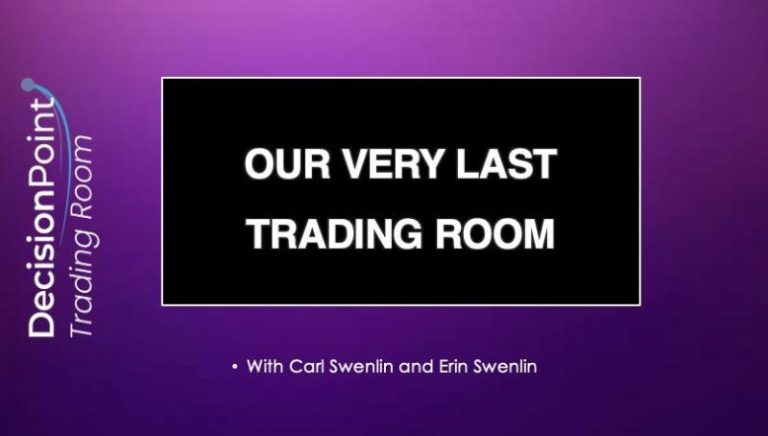
Today, Carl and Erin made a big announcement! They are retiring at the end of June so today was the last free DecisionPoint Trading Room. It has been our pleasure educating you over the years and your participation in the trading room has been fantastic! Be sure and sign up to follow the DecisionPoint Blog on StockCharts.com where we do plan to publish articles periodically. (Subscribers: you will be notified via email as to how your subscription will be handled. Stay tuned.)
After the big announcement, Carl opened the show with the DP Signal Tables to give us a sense as to the market’s overall trend and condition.
Carl then went through his regular market overview that included Bitcoin, Bonds, Yields, Crude Oil, Gold, Gold Miners and the Dollar.
Once finished with the market overview, Carl walked us through the Magnificent Seven in the short and intermediate terms by looking at both the daily and weekly charts.
The pair took questions including a discussion on relative strength using the Silver Cross Index and Golden Cross Index.
Erin took the controls and went through the 26 indexes, sectors and industry groups that have under the hood indicators. She walked us through the CandleGlance and explained her findings along the way.
Questions popped up again with Carl discussing his strategy of using dividend paying stocks in retirement. He mentioned the Dividend Aristocrats and Dividend Kings lists as a great source to find good dividends. Also a shout out to The Bahnsen Group ETF (TBG).
Erin finished by looking at viewer symbol requests.
It has been a great run learning and teaching about technical analysis. Thank you again for your support over the years!
01:10 DP Signal Tables
03:48 Market Overview
16:18 Magnificent Seven
22:53 Questions (Relative Strength with Silver Cross and Golden Cross Indexes)
29:18 Sector Rotation and Market CandleGlance
34:57 Question regarding dividend paying stocks
39:51 Symbol Requests
Technical Analysis is a windsock, not a crystal ball. –Carl Swenlin
(c) Copyright 2025 DecisionPoint.com
Disclaimer: This blog is for educational purposes only and should not be construed as financial advice. The ideas and strategies should never be used without first assessing your own personal and financial situation, or without consulting a financial professional. Any opinions expressed herein are solely those of the author, and do not in any way represent the views or opinions of any other person or entity.
DecisionPoint is not a registered investment advisor. Investment and trading decisions are solely your responsibility. DecisionPoint newsletters, blogs or website materials should NOT be interpreted as a recommendation or solicitation to buy or sell any security or to take any specific action.
Helpful DecisionPoint Links:
Price Momentum Oscillator (PMO)
Swenlin Trading Oscillators (STO-B and STO-V)



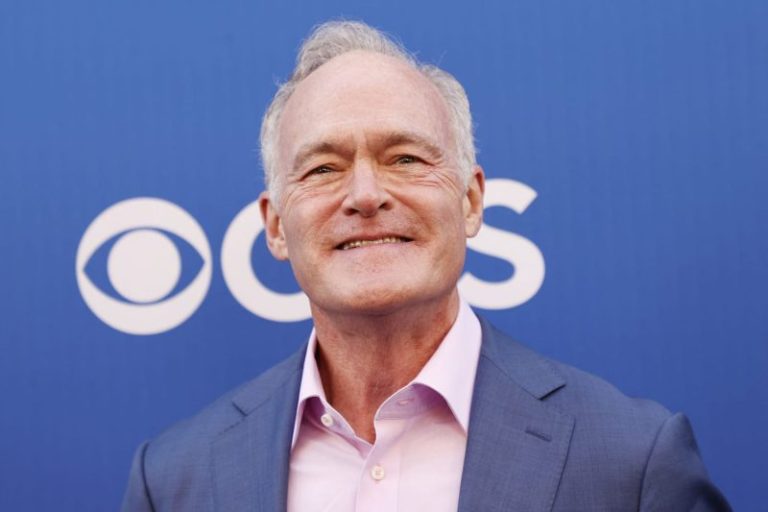
“60 Minutes” correspondent Scott Pelley paid tribute Sunday to Bill Owens, the show’s executive producer who resigned last week, saying on the air that “none of us is happy” about the extra supervision that corporate leaders are imposing.
Pelley made his comments at the end of the evening’s CBS News telecast, saying that in quitting, Owens proved he was the right person for the job.
“It was hard on him and it was hard on us,” Pelley said. “But he did it for us — and you.”
His on-air statement was an unusual peek behind the scenes at the sort of inner turmoil that viewers seldom get the opportunity to see.
Owens, only the third top executive in the 57-year history of television’s most influential newscast, resigned last week, saying he no longer felt he had the independence to run the program as he had in the past, and felt necessary.
CBS News’ parent company, Paramount Global, is in the midst of a merger with Skydance Media that needs the approval of the Trump administration. Trump has sued “60 Minutes” for $20 billion, saying it unfairly edited a Kamala Harris interview last fall to her advantage. Owens and others at “60 Minutes” believe they did nothing wrong and have opposed a settlement.
As a result, Pelley explained to viewers on Sunday, Paramount has begun to supervise “60 Minutes” stories in new ways. Former CBS News President Susan Zirinsky, a longtime news producer, has reportedly been asked to look at the show’s stories before they air.
“None of our stories has been blocked,” Pelley said. “But Bill felt he lost the independence that honest journalism requires. No one here is happy about it. But in resigning, Bill proved he was the right person to lead ‘60 Minutes’ all along.”
Despite this, “60 Minutes” has done tough stories about the Trump administration almost every week since the inauguration in January, many of them reported by Pelley. On Sunday, “60 Minutes” correspondent Sharyn Alfonsi had the latest, interviewing scientists about cutbacks at the National Institutes for Health.
Trump was particularly angered by the show’s telecast two weeks ago, saying on social media that CBS News should “pay a big price” for going after him.
International Business Machines Corporation on Monday announced it will invest $150 billion in the U.S. over the next five years, including more than $30 billion to advance American manufacturing of its mainframe and quantum computers.
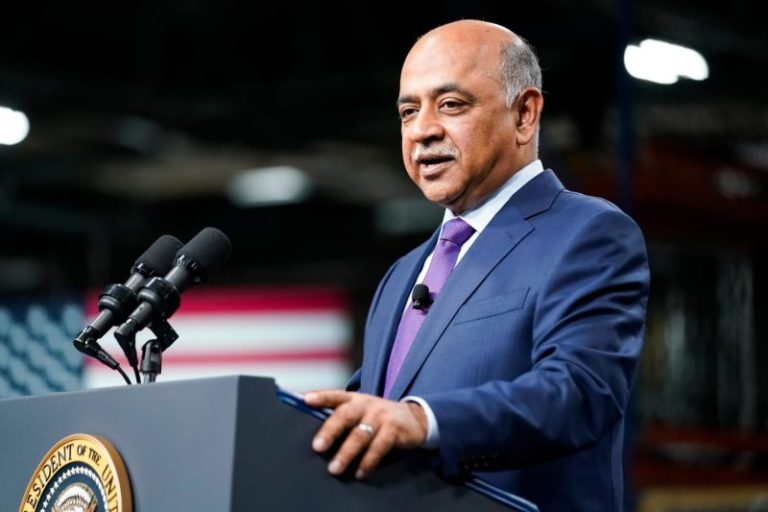
“We have been focused on American jobs and manufacturing since our founding 114 years ago, and with this investment and manufacturing commitment we are ensuring that IBM remains the epicenter of the world’s most advanced computing and AI capabilities,” IBM CEO Arvind Krishna said in a release.
The company’s announcement comes weeks after President Donald Trump unveiled a far-reaching and aggressive “reciprocal” tariff policy to boost manufacturing in the U.S. As of late April, Trump has exempted chips, as well as smartphones, computers, and other tech devices and components, from the tariffs.
IBM said its investment will help accelerate America’s role as a global leader in computing and fuel the economy. The company said it operates the “world’s largest fleet of quantum computer systems,” and will continue to build and assemble them in the U.S., according to the release.
IBM competitor Nvidia, the chipmaker that has been the primary benefactor of the artificial intelligence boom, announced a similar push earlier this month to produce its NVIDIA AI supercomputers entirely in the U.S.
Nvidia plans to produce up to $500 billion of AI infrastructure in the U.S. via its manufacturing partnerships over the next four years.
Last week, IBM reported better-than-expected first-quarter results. The company said it generated $14.54 billion in revenue for the period, above the $14.4 billion expected by analysts. IBM’s net income narrowed to $1.06 billion, or $1.12 per share, from $1.61 billion, or $1.72 per share, in the same quarter a year ago.
IBM’s infrastructure division, which includes mainframe computers, posted $2.89 billion in revenue for the quarter, beating expectations of $2.76 billion.
The company announced a new z17 AI mainframe earlier this month.
CNBC’s Jordan Novet contributed to this report.

Radiopharm Theranostics (RAD:AU) has announced First patient dosed in Phase IIb imaging for Brain Mets
Download the PDF here.

Brightstar Resources (BTR:AU) has announced RHI: Acqn of royalty over Sandstone Gold Project tenements
Download the PDF here.