
Author

admin

Browsing

Here’s a quick recap of the crypto landscape for Wednesday (April 16) as of 9:00 p.m. UTC.

Get the latest insights on Bitcoin, Ethereum and altcoin performance along with a round-up of key cryptocurrency market news.

Bitcoin and Ethereum price update

At the time of this writing, Bitcoin (BTC) was priced at US$84,336.30 and is up 0.4 percent in 24 hours. The day’s range has seen a low of US$83,592.79 and a high of US$85,311.80.23.

Bitcoin’s price movements on April 16.

Chart via TradingView.

Trade tension escalation between China and the US continues to drag on the crypto market.

Ethereum (ETH) is priced at US$1,588.68, a 1.1 percent decrease over the past 24 hours. The cryptocurrency reached an intraday low of US$1,551.41 and a high of US$1,605.30.

Altcoin price update

  • Solana (SOL) is currently valued at US$132.69, up 3.7 percent over the past 24 hours. SOL experienced a low of US$124.95 and peaked as the stock markets closed on Wednesday.
  • XRP is trading at US$2.11, reflecting a 0.6 percent decrease over the past 24 hours. The cryptocurrency recorded an intraday low of US$2.07 and reached its highest point as markets closed for the day.
  • Sui (SUI) is priced at US$2.11, showing a decreaseof 0.7 percent over the past 24 hours. It achieved a daily low of US$2.04 and a high of US$2.13
  • Cardano (ADA) is trading at US$0.6130, down 0.9 percent over the past 24 hours. Its lowest price on Wednesday was US$0.6007, with a high of US$0.6152.

Today’s crypto news to know

Analysts confirm crypto bear market

Recent market analysis suggests the cryptocurrency market has been experiencing a bear market cycle. Bitcoin’s price has been below its 200-day simple moving average (SMA) since March. The 200-day SMA is a key metric used to identify trends in Bitcoin’s price movements and potential market cycles.

“The 200DMA model on bitcoin does suggest that the token’s recent steep decline qualifies this as a bear market cycle starting in late March. But the same exercise performed on the COIN50 index (which includes the top 50 tokens by market capitalization) shows the asset class as a whole has been unequivocally trading in bear market territory since the end of February,” David Duong, global head of research at Coinbase Institutional, said in a note published Monday.

“All of these structural pressures stem from the uncertainty of the broader macro environment, where traditional risk assets have faced sustained headwinds from fiscal tightening and tariff policies, contributing to the paralysis in investment decision making.’

The authors of the report urge cautious trading for the next month or so, after which the sentiment could change “rather quickly.” Duong said the market could rebound in the second half of 2025.

A market analysis by Bitcoin researcher Axel Adler Jr also points to potential for price recovery later in the year, noting the increasing dominance of US-regulated exchanges and a recurring bullish technical signal. Reduced supply, noted by analyst Borin Vest, could also contribute to upward price movement.

Janover increases Solana holdings

According to an April 15 announcement from real estate-focused financial technology firm Janover (NASDAQ:JNVR), the company’s Solana holdings have doubled to 163,651.7 after its latest purchase of 80,567 tokens for roughly US$10.5 million.

Janover’s total Solana holdings are now worth about US$21.2 million, including staking rewards.

Janover recently raised approximately US$42 million in a convertible note and warrants sale to bolster its digital asset treasury strategy. This funding round saw participation from investors including Pantera Capital, Kraken, Arrington Capital, Protagonist, The Norstar Group, Third Party Ventures, Trammell Venture Partners and 11 angel investors.

The company intends to utilize the newly acquired capital to enhance its digital asset treasury strategy, including immediate staking of recently purchased SOL to generate additional revenue.

Ripple Labs and SEC appeal paused amid settlement talks

In the ongoing legal dispute between Ripple Labs and the SEC, an appeals court has approved a request to halt proceedings while settlement discussions take place, raising speculation about a potential imminent resolution. The SEC is required to provide an update on the situation by June 15.

China faces a regulatory dilemma over seized crypto assets

China’s growing trove of seized cryptocurrencies — confiscated from fraud, money laundering and gambling cases — has become a legal and political hot potato as local governments debate how to convert illicit digital wealth into usable state revenue, Reuters reported.

With crypto trading banned and virtual assets not recognized as legal tender, authorities currently rely on loosely regulated private firms to offload seized tokens on offshore exchanges, raising concerns over transparency, corruption and inconsistent enforcement.

Legal experts, judges and financial authorities are now calling for new national guidelines, including proposals to centralize asset management, establish crypto disposal agencies or even hold confiscated Bitcoin as sovereign reserves — a potential pivot that could reshape China’s crypto stance amid broader geopolitical and economic shifts.

OKX ramps up US presence with exchange launch, wallet rollout

OKX, one of the world’s top cryptocurrency exchanges, is making a calculated leap into the US market with a phased rollout of its centralized trading platform and a powerful self-custody Web3 wallet for retail and institutional users.

Spearheading this expansion is newly appointed US CEO Roshan Robert and a fresh San Jose headquarters, signaling the company’s strategic commitment to regulatory compliance and American market penetration.

The exchange offers deep liquidity, low fees and fast execution, while the new wallet — compatible with over 130 blockchains — lets users manage NFTs, tokens and dApps across multiple ecosystems.

OKX is also prioritizing transparency, publishing monthly proof-of-reserves reports verified by third-party auditors to reinforce user trust in its custodial holdings.

Semler Scientific doubles down on Bitcoin despite substantial unrealized loss

Healthcare technology firm Semler Scientific (NASDAQ:SMLR) revealed a US$41.8 million paper loss on its Bitcoin investment as of Q1 2025 following a sharp decline in Bitcoin’s price — from US$93,500 in January to US$82,350 in March — but has nonetheless pledged to press forward with its crypto acquisition strategy.

As of March 31, the company held 3,182 Bitcoin valued at over US$263 million. It remains undeterred, announcing plans to issue up to US$500 million in securities to support further purchases and shore up operating capital.

Semler also disclosed a tentative US$30 million settlement with the Department of Justice related to a civil probe, signaling ongoing legal pressures even as it pushes into risky, non-core asset classes.

The firm’s stock is down 36 percent this year, remaining a polarizing example of Bitcoin’s expanding foothold in non-crypto industries.

Oklahoma pulls out of Bitcoin reserve race after narrow senate vote

Oklahoma’s ambitious plan to become a state-level crypto pioneer came to an abrupt halt after its Strategic Bitcoin Reserve Act (HB1203) failed to pass the Senate Revenue and Taxation Committee by a razor-thin 6–5 vote.

The proposed legislation would have allowed the State Treasurer to allocate up to 10 percent of public fund assets into Bitcoin and other large-cap digital assets, while also exploring staking mechanisms and crypto integration into retirement accounts.

Supporters argued the bill could hedge against inflation and government overreach, but critics raised concerns about volatility, fiduciary responsibility and the need for deeper regulatory safeguards.

With the bill’s collapse, Oklahoma joins a growing list of states backing away from crypto investment, leaving Arizona, Texas and New Hampshire as the frontrunners in the race to make Bitcoin a strategic public asset.

Securities Disclosure: I, Giann Liguid, hold no direct investment interest in any company mentioned in this article.

Securities Disclosure: I, Meagen Seatter, hold no direct investment interest in any company mentioned in this article.

Keep reading…Show less
This post appeared first on investingnews.com

As part of a sweeping policy shift aimed at tightening control over its most lucrative natural resource, Ghana has banned all foreigners from trading in its domestic gold market, BBC reported.

The directive, announced by the newly created Ghana Gold Board (GoldBod), forms part of the national government’s legislative overhaul to increase state revenues, curb illegal mining and regain regulatory control over the country’s booming artisanal and small-scale gold sector.

GoldBod was created as part of the Ghana Gold Board bill 2025, which was passed by parliament on March 29 and signed into law by President John Mahama on April 2. The act rendered all previously issued licenses invalid, except for licenses granted to large-scale mining companies.

“All foreigners are hereby notified to exit the local gold trading market not later than 30th April, 2025,” said GoldBod spokesperson Prince Kwame Minkah in a statement.

He added that any person or entity operating without a GoldBod-issued license after that date would be committing a punishable offense.

The new framework centralizes authority over gold purchasing, selling and exporting under GoldBod. Foreigners may still apply to off-take gold through GoldBod but are now barred from any direct participation in Ghana’s internal gold value chain.

Ghana, Africa’s largest gold producer and the sixth largest gold producer globally, has long struggled to translate its mineral wealth into broad-based economic prosperity.

The government sees this policy as a critical step to capture more value from gold production, especially from the artisanal mining sector, which contributes nearly US$5 billion annually in exports.

In March, Finance Minister Cassel Ato Forson said the government had allocated US$279 million to GoldBod to purchase and export at least 3 metric tons of gold per week from artisanal mining operations. Transactions will be conducted exclusively in Ghanaian cedis and priced based on rates from the Bank of Ghana.

The government hopes this mechanism will help increase foreign exchange inflows and stabilize the depreciating national currency.

Crackdown on illegal gold trade and foreign involvement

While aimed primarily at increasing fiscal revenues, the new law could also serve as a mechanism to limit avenues for illicit gold sales and environmental degradation caused by illegal mining, known locally as galamsey.

Illegal gold mining has become a flashpoint in Ghana’s political and environmental discourse. Fueled by soaring global gold prices, rising youth unemployment and weak enforcement, galamsey has led to extensive deforestation, mercury pollution and the contamination of over 60 percent of the country’s water bodies.

Chinese nationals have been widely implicated in the galamsey trade, frequently operating alongside local actors and allegedly flouting environmental and labor regulations.

While the new law does not explicitly target a particular nationality, it is expected to curtail foreign involvement in illegal gold sourcing.

Impact on Ghana’s mining giants

The policy shift comes amid broader changes in Ghana’s gold mining landscape, which is home to some of the world’s largest mining firms. However, as large-scale mining companies did not have their licenses revoked, such firms should not be affected by the new legislation.

The government of Ghana currently has a 10 percent free carried interest in regulated mines operating in the country, which it is entitled to after it grants an exploitation permit.

Publicly traded companies mining and exploring for gold in Ghana include:

    Gold Fields’ Damang mine to close after lease denied

    In a separate but related development, South Africa-based Gold Fields is ceasing operations at its Damang mine in Ghana after the government rejected its application for a lease renewal.

    Mining at Damang had already ended in 2023, and the mine was processing only stockpiles, but Gold Fields had sought an extension as part of its end-of-life plan.

    “The government has instructed Gold Fields to cease operations and vacate the lease area by the 18th April on expiry of the lease,” the company said in a statement, adding that it is working to safely wind down operations.

    Damang produced 135,000 ounces in 2024, about 6 percent of Gold Fields’ total output. The company’s larger Tarkwa mine remains operational.

    Securities Disclosure: I, Giann Liguid, hold no direct investment interest in any company mentioned in this article.

    Keep reading…Show less
    This post appeared first on investingnews.com

    CleanTech Lithium (AIM:CTL), an innovative sustainable lithium developer in Chile, is collaborating with DuPont Water Solutions, a business unit of DuPont, to test lithium processing technology.

    DuPont has developed a new nanofiltration (NF) membrane technology for high lithium recovery. This will be tested in CleanTech Lithium’s direct lithium extraction (DLE) downstream process.

    The role of the NF is to remove impurities and maximise lithium recovery. DuPont’s new NF membrane element (named FilmTec LiNE-XD nanofiltration elements) is specifically designed for the lithium sector and will be tested in CTL´s next scheduled phase of post-DLE pilot plant testing. CTL is implementing NF following the eluate concentration stage which utilises industrial forward osmosis (iFO) in the concentrating of lithium and reduction of boron. CleanTech Lithium is investigating the potential of these technologies to eliminate the need for thermal evaporation (TE) and crystallisation in production of battery grade lithium carbonate, which would result in potentially significant CAPEX savings.

    Click here for the full press Release

    This post appeared first on investingnews.com

    The copper price moved significantly during the first quarter with momentum that carried it to an all time high on the COMEX of US$5.26 per pound on March 26.

    The rally in prices was driven by uncertainty in global financial markets due to the threat of tariffs from the United States and President Donald Trump.

    This resulted in increased tightness and panic in copper inventories as more shipments were diverted into US warehouses to preempt any potential price hikes. However, prices eased at the beginning of April as concerns about a global recession began to outweigh fears of commodity shortages, causing the price of copper to drop below US$4.50 per pound.

    How has this affected small-cap copper mining companies on the TSX Venture Exchange? Read on to learn about the the five best-performing junior copper stocks since the start of 2025.

    Data for this article was gathered on April 7, 2025, using TradingView’s stock screener, and copper companies with market caps of over C$10 million at that time were considered.

    1. Camino Minerals (TSXV:COR)

    Year-to-date gain: 477.78 percent
    Market cap: C$10.47 million
    Share price: C$0.26

    Camino Minerals is a copper exploration company focused on advancing assets located in Peru.

    Its flagship Los Chapitos project, located near the coastal town of Chala, covers approximately 22,000 hectares and hosts near-surface mineralization. The company has been advancing exploration work on the property since 2016.

    Shares in Camino gained significantly after announcing the start of a discovery exploration program at the project on January 22. The company stated the program would consist of 11 holes and 1,200 meters of drilling along the La Estancia fault, focusing on newly identified copper breccias and mantos to determine their extension at depth.

    Camino has not provided further updates from Los Chapitos. Another significant update since the start of the year was announced on March 17, when it filed a pre-feasibility study for the Puquois copper project. The project was originally acquired as part of an October 2024 definitive agreement to create a 50/50 joint venture between Camino and Nittetsu Mining (TSE:1515) for the construction-ready project.

    The study results demonstrate a post-tax net present value of US$118 million, with an internal rate of return of 23.4 percent and a payback period of 3.1 years at a fixed copper price of US$4.28 per pound. It also suggested all-in sustaining costs for the 14.2-year life of the mine were US$2 per pound.

    In addition to the economic details, the included mineral resource estimate shows measured and indicated amounts of 149,000 metric tons of copper with a grade of 0.46 percent from 32.16 million metric tons of ore.

    Shares in Camino reached a year-to-date high of C$0.31 on January 29.

    2. King Copper Discovery (TSXV:KCP)

    Year-to-date gain: 240 percent
    Market cap: C$36.64 million
    Share price: C$0.17

    King Copper Discovery is a copper, silver and gold explorer that is developing a portfolio of projects in South America. The company changed its name from Turmalina Metals in March.

    Its primary focus is the Colquemayo project in Moquegua, Peru. In July 2024, King Copper entered into an option agreement with Compania de Minas Buenaventura to acquire a 100 percent ownership stake in the property.

    The 6,600 hectare site has seen more than 20,000 meters of historic core drilling and hosts multiple porphyry targets that have been identified but have gone untested. Highlighted drill samples from the property have demonstrated results of 2.4 percent copper and 10 grams per metric ton (g/t) silver over 237.3 meters, including 14.8 percent copper and 47 g/t silver over 31.3 meters.

    In news released on February 12, the company said it was intensifying its focus on the project and would be relogging historic cores. Additionally, King Copper hired Insideo, a Lima-based environmental consulting firm, to help advance baseline studies and the drill permit process.

    The release also indicated that the company was in the process of rebranding from Turmalina Metals to King Copper. As part of the restructuring, company CEO Roger James stepped down, maintaining a seat on the board, and was replaced by Jonathan Richards as interim CEO.

    On March 11, the company began trading under its new name and ticker. Shares in King Copper Discovery reached a year-to-date high of C$0.225 on March 25.

    3. BCM Resources (TSXV:B)

    Year-to-date gain: 211.11 percent
    Market cap: C$25.05 million
    Share price: C$0.14

    BCM Resources is an exploration company working to advance its flagship Thompson Knolls project in Utah, United States.

    The greenfield copper, molybdenum, gold and silver project in Utah’s Great Basin consists of 225 federal unpatented lode mining claims and two state section leases covering an area of 2,242 hectares.

    Exploration of the project area began in the 1970s, when a US Geological Survey aerial survey identified a prominent magnetic anomaly. In the 1990s, follow-up work was conducted at the target.

    BCM carried out its last drill program at the property in 2023. At the time, the company announced that one drill hole encountered a significant mineral intercept of 0.66 percent copper, 0.12 grams per metric ton (g/t) gold and 7.4 g/t silver over 155.4 meters starting at a depth of 621.8 meters. The sample also contained eight intervals with greater than 1 percent copper over 24.3 meters.

    The company received approval from the Bureau of Land Management for a plan of operation to continue drilling at the project. In a July 2024 update, the company released data from an analysis of the project’s porphyry-skarn system by the Colorado School of Mines, which it plans to use to prepare for the drilling at the site.

    Shares in BCM Resources reached a year-to-date high of C$0.15 on April 9.

    4. DLP Resources (TSXV:DLP)

    Year-to-date gain: 152.94 percent
    Market cap: C$55.99 million
    Share price: C$0.43

    DLP Resources is an explorer focused on advancing its flagship Aurora copper-molybdenum project in Peru.

    The 8,500 hectare site is located in the Central Andes. Exploration work has been performed at the site since the early 2000s, with DLP conducting drill programs in 2023 and 2024.

    Shares in DLP have been rising since the release of a technical report for Aurora on February 27, which included a maiden resource estimate with significant copper and molybdenum spread over two zones.

    The inferred resource totals 1.05 billion metric tons of ore containing 4.65 billion pounds of copper, 1.1 billion pounds of molybdenum and 80 million ounces of silver. The resource has average grades of 0.2 percent copper, 0.05 percent molybdenum and 2.4 grams per metric ton silver.

    The company said it is pleased with the size and results of the report and will continue drilling the site to upgrade the resource ahead of a preliminary economic assessment.

    DLP shares also got a boost on April 1 after it released its management’s discussion and analysis for the nine months ending on January 31. The release covers the firm’s activities for the period, highlighting its recent resource estimate, as well as the completion of a non-brokered private placement in January for proceeds of C$1.36 million.

    Shares in DLP reached a year-to-date high of C$0.48 on April 3.

    5. C3 Metals (TSXV:CCCM)

    Year-to-date gain: 150 percent
    Market cap: C$52.28 million
    Share price: C$0.60

    C3 Metals is an exploration company working to advance its assets in Jamaica and Peru.

    C3’s primary Jamaican asset is the Bellas Gate project, a 13,020 hectare site featuring 14 porphyry and over 30 epithermal prospects along an 18 kilometer strike. To date, drilling at the site has concentrated on a 4 kilometer zone encompassing the Provost, Geo Hill, Camel Hill and Connors prospects.

    Shares in C3 experienced significant gains after it announced on February 11 that it had signed an earn-in agreement with a Freeport-McMoRan (NYSE:FCX) subsidiary, which can gain up to a 75 percent interest in the project. Under the agreement, Freeport must contribute US$25 million in exploration and project expenditures over five years to earn the initial 51 percent interest, and an additional US$50 million over the following four years for the remaining 24 percent.

    In Peru, C3 has focused on advancing its Jasperoide copper-gold project. The site in Southern Peru spans 30,000 hectares and hosts two porphyry and more than 15 skarn prospects across two 28 kilometer belts.

    According to a July 2023 technical report, a mineral resource estimate reported a measured and indicated resource of 51.94 million metric tons of ore with an average grade of 0.5 percent copper and 0.2 g/t gold for contained metal totaling 569.1 million pounds of copper and 326,800 ounces of gold.

    C3 released an exploration update from its Khaleesi copper-gold project area in Jasperoide on February 19, reporting that a soil sampling campaign defined a copper-molybdenum anomaly extending 1,900 meters by up 650 meters. Two zones contained average concentrations of 950 parts per million copper and 650 ppm of copper.

    The company stated that it is working to complete geophysical surveys by the end of March and will use the data to implement a maiden diamond drill program at the target. It closed a US$11.5 million bought deal private placement on March 19 that will be used in part for exploration and development at the Khaleesi target.

    Shares in C3 Metals reached a year-to-date high of C$0.69 on April 1.

    Securities Disclosure: I, Dean Belder, hold no direct investment interest in any company mentioned in this article.
    Keep reading…Show less
    This post appeared first on investingnews.com

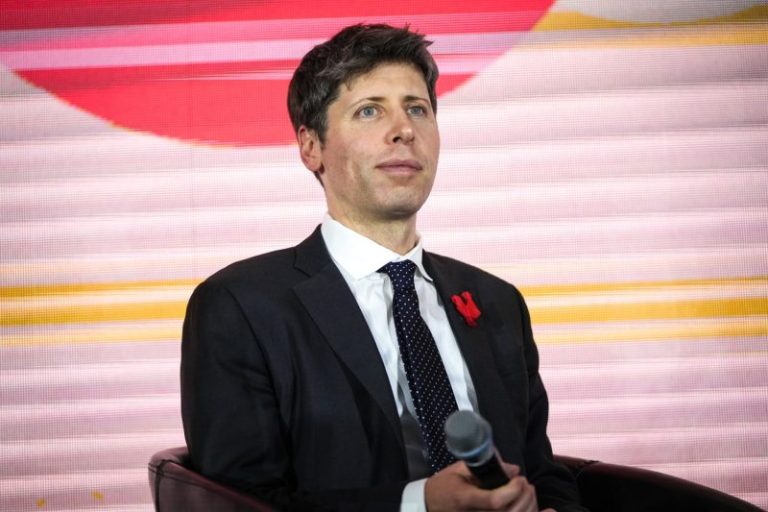
    OpenAI is in talks to pay about $3 billion to acquire Windsurf, an artificial intelligence tool for coding help, CNBC has confirmed.

    Windsurf, formerly known as Codeium, competes with Cursor, another popular AI coding tool, as well as existing AI coding features from companies like Microsoft, Anthropic and OpenAI itself.

    Bloomberg was first to report on the potential deal, which CNBC confirmed with a person familiar with the matter who asked to remain anonymous since the talks are ongoing.

    OpenAI is rushing to stay ahead in the generative AI race, where competitors including Google, Anthropic and Elon Musk’s xAI are investing heavily and regularly rolling out new products. Late last month, OpenAI closed a $40 billion funding round, the largest on record for a private tech company, at a $300 billion valuation.

    OpenAI on Wednesday released its latest AI models, o3 and o4-mini, which it said are capable of “thinking with images,” meaning they can understand and analyze a user’s sketches and diagrams, even if they’re low quality.

    Should a deal take place with Windsurf, it would be by far OpenAI’s biggest acquisition. The company has made several smaller deals in the past, including the purchase last June of analytics database provider Rockset and video collaboration platform Multi. In 2023, OpenAI bought Global Illumination, which had been “leveraging AI to build creative tools, infrastructure, and digital experiences,” according to a blog post when the deal was announced. Terms weren’t disclosed for any of those transactions.

    Windsurf is among the tools, alongside Cursor and Replit, that developers have flocked to in recent months to “vibe code,” a term that refers to having AI models quickly assemble code for new software. Andrej Karpathy, a former OpenAI co-founder, coined the term in a post on X in February. Earlier this month Microsoft, whose Visual Studio Code text editor is widely used among programmers, announced an Agent Mode feature with similar capability.

    The startup’s investors include Founders Fund, General Catalyst, Greenoaks and Kleiner Perkins. TechCrunch reported in February that Windsurf was raising a funding round at a $2.85 billion valuation.

    — CNBC’s Jordan Novet contributed to this report.

    This post appeared first on NBC NEWS

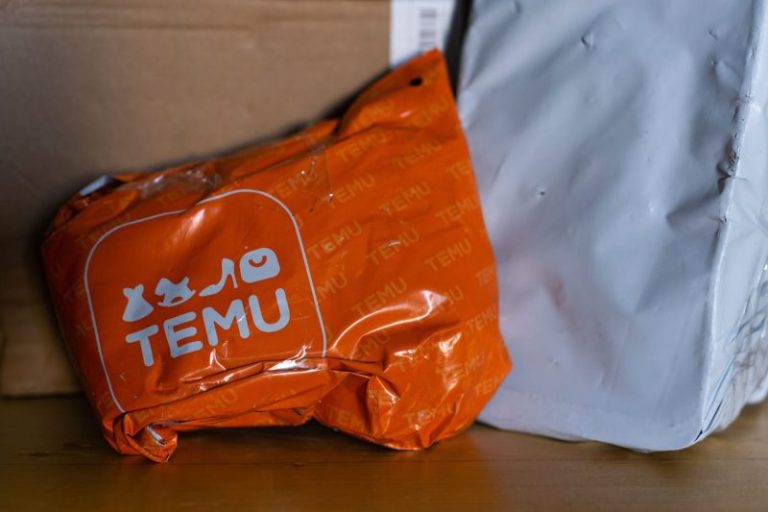
    Chinese online retailer Temu, whose “Shop like a billionaire” marketing campaign made its way to last year’s Super Bowl, has dramatically slashed its online ad spending in the U.S. and seen its ranking in Apple’s App Store plunge following President Donald Trump’s sweeping tariffs on trade partners.

    Temu, which is owned by Chinese e-commerce giant PDD Holdings, had been on an online advertising blitz in recent years in a bid to attract deal-hungry American shoppers to its site. With hefty spending on TV ads as well across Facebook, the company promoted clothing, jewelry, home goods and electronics at bargain basement prices.

    The strategy was so effective that Temu topped Apple’s list of the most downloaded free apps in the U.S. for the past two years. Downloads of Temu on Apple’s App Store have fallen 62% in recent days, according to data from SimilarWeb, a digital data and analytics company. Ads for 50-cent eyebrow trimmers and $5 t-shirts that used to blanket Google search results and Facebook feeds have all but disappeared.

    President Trump’s tariffs have upended Temu’s business model, along with its advertising strategy. Packages shipped from China are now subject to a tariff rate of 145%, while the de minimis provision, which allows shipments worth less than $800 to enter the country duty-free, is set to go away on May 2.

    Temu and Shein, a fast-fashion marketplace with ties to China, plan to raise their prices in response to the tariffs. Both companies posted notices to their websites in recent days that warned they’ll be raising prices late next week.

    “Due to recent changes in global trade rules and tariffs, our operating expenses have gone up,” Temu said on its site. “To keep offering the products you love without compromising on quality, we will be making price adjustments starting April 25, 2025.”

    Sellers on Amazon’s third-party marketplace, many of whom source their products from China, have said they’re considering raising prices as they reckon with higher costs from the tariffs. Many businesses on TikTok Shop, the social media app’s marketplace, also count on Chinese manufacturers for their items.

    Amazon launched a competitor to Temu last November, called Amazon Haul, which features items under $20 that are largely from China.

    The Temu app is now No. 69 in a list of the top free apps in the U.S., after consistently ranking in the top 10, according to data from Sensor Tower. Shein is currently at 42, down from 15 last month. PDD’s shares that trade in the U.S. have plummeted 22% this month, compared to the Nasdaq’s 6% drop. Shein is privately held.

    Rival Chinese retailers have subsequently risen to the top of the app store ranks, including Beijing-based wholesaler DHgate, which surged to the No. 2 top free iPhone app in the U.S., and Alibaba’s Taobao, which ranked No. 7. Bloomberg reported on Tuesday that viral videos promoting their cheap products have spurred the download frenzy.

    A separate analysis by SimilarWeb showed Temu’s paid traffic, or search, display and social media advertising that drove visits to its website, has dropped 77% since April 11. Temu’s paid traffic previously outpaced nonpaid traffic to its website by 2 1/2 times, Ben Parkes, a consumer goods and retail analyst at Similarweb, said in an interview.

    Marketing firm Tinuiti found that 20% of U.S. Google Shopping ad impressions were bought by Temu on April 5. A week later, that number had fallen to zero. By comparison, Shein’s impressions remained at 17% on April 12, while 60% of impressions were bought by Amazon.

    Representatives from Temu and Shein didn’t immediately respond to requests for comment.

    Temu was previously one of Meta’s largest advertisers, but it appears to have dramatically scaled back its spending on the platform. As of Wednesday, Temu is running six ads across Meta platforms in the U.S., a review of Meta’s ad library shows. Temu is running approximately 27,000 ads across Meta sites and apps globally, particularly in Europe and the U.K.

    That could be troublesome for Meta’s advertising business, which has gotten a significant boost from the discount retailer. Advertising analyst Brian Wieser at Madison and Wall estimated that more than $7 billion of Meta’s $132 billion in ad revenue in 2023 came from China. Meta is scheduled to report first-quarter results on April 30.

    E-commerce analyst Juozas Kaziukenas said he expects Temu to turn its ads back on in the U.S. at some point, but that the company appears to be shifting its dollars to other markets in the interim.

    “It doesn’t mean Temu usage has dropped as significantly as the app did,” Kaziukenas said in an email. “But it means that new user acquisition is gone.”

    This post appeared first on NBC NEWS

    If last weekend’s tech tariff exemptions teach us anything, it’s this: trying to make near-term market forecasts based on tariff assumptions is a fool’s errand.

    But that leaves a big question for active investors near or in retirement: How do you make smart decisions when the market’s running on chaos?

    On Monday morning, when all three broader U.S. stock market indexes were in the green, I pulled up the new StockCharts Market Summary page and glanced at the Keller Market Models panel to check the S&P 500’s short-term, medium-term, and long-term trend positions. According to this model’s forecast, the S&P 500, despite its short- and medium-term declines, still has its uptrend intact. If this reading of the market environment remains as is, then perhaps it’s time to look for signs of a major reversal to the upside.

    But what if the bullish reversal isn’t broad-based? What if it moves by sectors instead?

    One way to check is by looking at the Bullish Percent Indexes (BPIs) within the Market Summary. Here’s what it showed on Monday:

    FIGURE 1. BULLISH PERCENT INDEXES.  Looking at the sectors—gold miners isn’t a sector—Consumer Staples and Utilities were the two that showed signs of hope.

    The BPI is a breadth indicator that tells you the percentage of stocks (within a given index) generating Point & Figure Buy Signals.

    An early warning bullish alert is triggered when the BPI is below 30% and then forms a new column of X’s (rises). On Monday, the only two sectors flashing these alerts were Consumer Staples (42.11%) and Utilities (45.16%). However, there’s a less obvious issue here. If the S&P 500’s long-term uptrend holds and eventually pulls the short- and medium-term trends higher, the leadership matters.

    Defensive sectors don’t typically drive or sustain bull markets. These sectors are where investors go when they’re playing it safe, not when they are betting on growth. In contrast, sectors like Technology or Consumer Discretionary usually take the lead in a true risk-on environment.

    Take a look at the Consumer Staples BPI chart.

    FIGURE 2. CONSUMER STAPLES BPI. Watch how price reacts to the support (magenta lines) and resistance ranges (blue-shaded area).

    Using the Consumer Staples Select Sector SPDR Fund (XLP) as a sector proxy, watch how its price reacts to key near-term resistance levels (marked by magenta lines) and the support zone (blue-shaded area). The ZigZag overlay highlights swing highs and lows, helping you spot the near-term trend: higher highs and higher lows (HH + HL) signal an uptrend, while lower highs and lower lows (LH + LL) indicate a downtrend. While the BPI for staples is flashing a bull alert, it is price action that ultimately defines the trend and provides the setup for whether to act or sit tight.

    Now, switch over to the Utilities sector BPI chart, using the Utilities Select Sector SPDR Fund (XLU) as a proxy.

    FIGURE 3. UTILITIES SECTOR BPI. Pay attention to the lower side of the price channel.

    While XLU faces a sideways range scenario similar to XLP, utilities are managing to make lower lows. This is why I used Price Channels here, whereas, in the Consumer Staples example, I overlaid a ZigZag line—the channels can better illustrate this subtle detail.

    Does this indicate relative weakness in XLU vs. XLP? Possibly, but it depends on whether XLU’s price swings can penetrate the upper channel (resistance) while staying above the lower channel (support), which it previously failed to do.

    But to answer the question of relative performance, this PerfCharts shows that XLU has been outperforming XLP—and both have outpaced the S&P 500—over the last year.

    FIGURE 4. COMPARING THE PERFORMANCE OF THE S&P 500, XLU, & XLP. Is the Utilities sector overbought or taking a breather?

    Whether Utilities have room for further upside is largely dependent on the broader market environment, which, for now, remains unpredictable. So keep an eye on the technical levels instead.

    What to Do Now

    Defensive sectors don’t lead bull markets; they are the sectors where investors hide out during turbulence. Right now, the market feels less like a cycle and more like a geopolitical chess match, where the moves are unpredictable, unorthodox, and hard to price in. If you decide to go “defensive,” Consumer Staples and Utilities may make sense, but only if the price action supports your goals, and likely only as a short-term play.

    That said, if you’re nearing retirement, it’s just as important to keep capital on the sidelines—ready to go on “offense” when the broader bull market kicks back in.


    Disclaimer: This blog is for educational purposes only and should not be construed as financial advice. The ideas and strategies should never be used without first assessing your own personal and financial situation, or without consulting a financial professional.

    Mali’s government has shut down Barrick Gold’s (TSX:ABX,NYSE:GOLD) office in the capital, Bamako, as part of an escalating dispute over alleged non-payment of taxes, sources familiar with the matter confirmed to Reuters.

    The closure marks a significant development in a long-running standoff between the Canadian mining giant and the West African country, which has seen tensions rise over mining revenues and the implementation of Mali’s new mining code.

    The latest development, which saw staff in Bamako locked out of the company’s offices, is linked to a separate tax dispute that has been brewing since 2023.

    Barrick signed an agreement with Mali’s government in February to end the nearly two-year-long conflict. This agreement, however, still awaits official approval from Malian authorities.

    One source close to the situation noted that the closure of Barrick’s Bamako office did not affect Barrick’s Loulo-Gounkoto mining complex, located in the western part of Mali.

    Barrick suspended operations at Loulo-Gounkoto after the Malian government seized around 3 metric tons of gold in January, as the government accused the company of failing to meet its tax obligations.

    This move was part of an ongoing battle between Barrick and the Malian government, which has been blocking the company’s gold exports since November 2024.

    The company released a statement addressing the office closure, and stated that the Malian government is also ‘threatening to place the Loulo-Gounkoto mine under provisional administration unless the mine was reopened and tax payments were made.’

    The company said is prepared to honor the agreement and restart production once the government finalizes it. ‘Its conclusion now appears to be obstructed by a small group of individuals placing personal or political interests above the long-term interests of Mali and its people,’ Barrick wrote in the release.

    Barrick has transferred nearly 40 Malian staff members from the Loulo-Gounkoto mine to the company’s Kibali mine in the Democratic Republic of Congo, with plans to transfer up to 100 employees.

    This move suggests that the resumption of operations at Loulo-Gounkoto may not happen in the immediate future, leaving a cloud of uncertainty hanging over the mine’s future.

    The closure of Barrick’s Bamako office is only the latest chapter in the tense relationship between the mining giant and the military-led government in Mali, which took power following coups in 2020 and 2021.

    Since then, Mali has taken a more assertive stance in its dealings with foreign companies, especially in the mining sector, and the country is one of Africa’s leading producers of gold.

    The suspension of operations at the Loulo-Gounkoto complex, which produces a significant portion of Mali’s gold, has raised concerns about the country’s future output.

    Mali’s mines ministry has already forecast a slight recovery in industrial gold output in 2025, with an expected rise to 54.7 metric tons of gold from the 51.7 metric tons produced in 2024. However, the ministry included Loulo-Gounkoto production in its calculations.

    In February, Barrick’s CEO, Mark Bristow, said that the company’s operations would be able to resume once it could export its gold again. However, in its annual report released in mid-March, Barrick acknowledged that the timeline for a resolution remained uncertain, and as such did not include the mine in its production guidance for 2025.

    Securities Disclosure: I, Giann Liguid, hold no direct investment interest in any company mentioned in this article.
    Keep reading…Show less
    This post appeared first on investingnews.com

    (TheNewswire)

    April 15th, 2025 TheNewswire – Vancouver, B.C. Opawica Explorations Inc . (TSXV: OPW) (FSE: A2PEAD) (OTC: OPWEF) (the ‘Company’ or ‘Opawica’), a Canadian mineral exploration company focused on precious and base metals in the Abitibi Gold Belt is providing an update on its 2025 exploration campaign at the Bazooka Property (‘Bazooka’).

    Opawica has intersected a broad 76-meter mineralized zone , starting at a depth of 285 meters and extending to 361 meters, at the contact with a graphitic horizon. The interval includes visible gold, with consistent occurrences of arsenopyrite, fuchsite, and quartz veining throughout.

    Visible gold was observed in drill hole OP-25-33 at a depth of 348.5 metres. (see below).

    The Company has completed ten diamond drill holes for a total of 2000 meters of drilling and submitted 610 core samples for assays. Of the ten drill holes completed, our team successfully intersected the Cadillac-Larder Fault multiple times, revealing promising mineralization that enhances our understanding of local mineralization patterns. The Cadillac-Larder Lake fault is a major structural element in the Abitibi Greenstone Belt, known for its rich and its historical significance in mining.

    Blake Morgan, Chief Executive Officer of Opawica, stated: ‘To date, the drilling has progressed extremely well. It is encouraging to encounter visible gold at such an early stage of our program. Over 2,000 metres of core have now been sent for assays, with multiple thick intercepts up to 76 meters in length. The Opawica team anticipates providing further updates soon and looks forward to receiving the final assay results.’

    The Bazooka property occurs along one of the most prolific auriferous structures in the world, the Cadillac-Larder Lake break/fault. The Cadillac-Larder Lake break/fault, in part, marks the boundary between the Archean Abitibi subprovince in the north and the predominantly metasedimentary Pontiac subprovince south of the fault.

    Gold mineralization on the property is hosted within the Main Zone, a mixed sequence of strongly altered quartz-carbonate-sericite and talc-chlorite schists derived from sedimentary and ultramafic to mafic volcanic protoliths, with an estimated true width of up to 60 metres.

    The break/fault zone lies at the base and is marked by a strongly graphitic fault with an estimated true width of up to two metres. The graphitic fault generally marks the contact between the sedimentary and ultramafic metavolcanic rocks.

    Structures and hydrothermal pathways were interpreted using the co-occurrence of selected exploration criteria in drill hole data. Interpreted prospective panels trend generally east-west with a steep dip to the north. They are constrained within the northern and southern borders of the Cadillac shear zone, a 150-metre-wide corridor of highly carbonate-chlorite-talc altered and schistosed ultramafic units, which form a Z-shape asymmetric drag fold in the area of the Bazooka historic mine.

    Mr.Yvan Bussieres, P.Eng.,Opawica’s geologist is the qualified person for Opawica Explorations and has reviewed and approved the technical content of this news release.

    About Opawica Explorations Inc.

    Opawica Explorations Inc. is a junior Canadian exploration company with a strong portfolio of precious and base metal properties within the Rouyn-Noranda region of the Abitibi Gold Belt in Québec. The Company’s management has a great track record in discovering and developing successful exploration projects. The Company’s objective is to increase shareholder value through the development of exploration properties using cost effective exploration practices, acquiring further exploration properties, and seeking partnerships by either joint venture or sale with industry leaders.

    FOR FURTHER INFORMATION CONTACT:

    Blake Morgan

    President and Chief Executive Officer

    Opawica Explorations Inc.

    Telephone: 236-878-4938

    Fax: 604-681-3552

    Neither the TSX Venture Exchange nor its Regulation Service Provider (as the term is defined in the policies of the TSX Venture Exchange) accepts responsibility for the adequacy of accuracy of this news release.

    Forward-Looking Statements

    This news release contains certain forward-looking statements, which relate to future events or future performance and reflect management’s current expectations and assumptions. Such forward-looking statements reflect management’s current beliefs and are based on assumptions made by and information currently available to the Company. Readers are cautioned that these forward-looking statements are neither promises nor guarantees, and are subject to risks and uncertainties that may cause future results to differ materially from those expected including, but not limited to, market conditions, availability of financing, actual results of the Company’s exploration and other activities, environmental risks, future metal prices, operating risks, accidents, labor issues, delays in obtaining governmental approvals and permits, and other risks in the mining industry. All the forward-looking statements made in this news release are qualified by these cautionary statements and those in our continuous disclosure filings available on SEDAR at www.sedar.com. These forward-looking statements are made as of the date hereof and the Company does not assume any obligation to update or revise them to reflect new events or circumstances as required by applicable law.

    Copyright (c) 2025 TheNewswire – All rights reserved.

    News Provided by TheNewsWire via QuoteMedia

    This post appeared first on investingnews.com