Author

admin

Browsing

Meta’s head of artificial intelligence research announced Tuesday that she will be leaving the company. 

Joelle Pineau, the company’s vice president of AI research, announced her departure in a LinkedIn post, saying her last day at the social media company will be May 30. 

Her departure comes at a challenging time for Meta. CEO Mark Zuckerberg has made AI a top priority, investing billions of dollars in an effort to become the market leader ahead of rivals like OpenAI and Google.

Zuckerberg has said that it is his goal for Meta to build an AI assistant with more than 1 billion users and artificial general intelligence, which is a term used to describe computers that can think and take actions comparable to humans.

“As the world undergoes significant change, as the race for AI accelerates, and as Meta prepares for its next chapter, it is time to create space for others to pursue the work,” Pineau wrote. “I will be cheering from the sidelines, knowing that you have all the ingredients needed to build the best AI systems in the world, and to responsibly bring them into the lives of billions of people.”

Pineau was one of Meta’s top AI researchers and led the company’s fundamental AI research unit, or FAIR, since 2023. There, she oversaw the company’s cutting-edge computer science-related studies, some of which are eventually incorporated into the company’s core apps. 

She joined the company in 2017 to lead Meta’s Montreal AI research lab. Pineau is also a computer science professor at McGill University, where she is a co-director of its reasoning and learning lab.

Some of the projects Pineau helped oversee include Meta’s open-source Llama family of AI models and other technologies like the PyTorch software for AI developers.

Pineau’s departure announcement comes a few weeks ahead of Meta’s LlamaCon AI conference on April 29. There, the company is expected to detail its latest version of Llama. Meta Chief Product Officer Chris Cox, to whom Pineau reported to, said in March that Llama 4 will help power AI agents, the latest craze in generative AI. The company is also expected to announce a standalone app for its Meta AI chatbot, CNBC reported in February. 

“We thank Joelle for her leadership of FAIR,” a Meta spokesperson said in a statement. “She’s been an important voice for Open Source and helped push breakthroughs to advance our products and the science behind them.” 

Pineau did not reveal her next role but said she “will be taking some time to observe and to reflect, before jumping into a new adventure.”

This post appeared first on NBC NEWS

Restaurant chain Hooters of America filed for bankruptcy protection in Texas on Monday, seeking to address its $376 million debt by selling all of its company-owned restaurants to a franchise group backed by the company’s founders.

Hooters, like other casual dining restaurants, has struggled in recent years due to inflation, the high costs of labor and food and declining spending by cash-strapped American consumers. The company currently directly owns and operates 151 locations, with another 154 restaurants operated by franchisees, primarily in the United States.

The privately-owned company, which shares a private equity owner with recently-bankrupt TGI Fridays, intends to sell all corporate-owned locations to a buyer group comprised of two existing Hooters franchisees, who operate 30 high-performing Hooters locations in the U.S., mainly in Florida and Illinois.

Hooters did not disclose the purchase price of the transaction, which must be approved by a U.S. bankruptcy judge before it becomes final.

Founded in 1983, Hooters became famous for its chicken wings and its servers’ uniform of orange shorts and low-cut tank tops.

The buyer group is backed by some of Hooters’ original founders, and it pledged to take Hooters “back to its roots.”

“With over 30 years of hands-on experience across the Hooters ecosystem, we have a profound understanding of our customers and what it takes to not only meet, but consistently exceed their expectations,” said Neil Kiefer, a member of the buyer group and the current CEO of the original Hooters’ location in Clearwater, Florida.

Hooters said it expects to complete the deal and emerge from bankruptcy in three to four months. The company has lined up about $35 million in financing from its existing lender group to complete the bankruptcy transaction.

Casual dining restaurants have been hammered by rising costs in 2024, with well-known chains like TGI Fridays, Red Lobster, Bucca di Beppo, and Rubio’s Coastal Grill all filing for bankruptcy last year.

Restaurant prices have risen about 30% in the last 5 years, outpacing consumer prices overall, according to the Federal Reserve Bank of St. Louis.

This post appeared first on NBC NEWS

Tesla CEO Elon Musk said Sunday that his involvement in the Trump administration could be hurting the automaker’s stock price.

Speaking at a town hall event in Wisconsin, Musk said his role with the so-called Department of Government Efficiency — which is pushing for widespread government job cuts — is creating backlash against his electric car company and hurting the stock.

“What they’re trying to do is put massive pressure on me, and Tesla I guess, to … stop doing this,” Musk said, according to Bloomberg News. “My Tesla stock and the stock of everyone who holds Tesla has gone, went roughly in half. I mean it’s a big deal.”

Elon Musk at a Cabinet meeting at the White House on March 24.Win McNamee / Getty Images

Shares of Tesla entered Monday already down more than 34% year to date, and the stock has been cut nearly in half from its peak in December. Shares were down an additional 6% in premarket trading Monday.

Tesla’s stock is trading at a little more than half of its highest level from December.

The drop for the stock could be a “buying opportunity” for the long term, said Musk, who was in Wisconsin ahead of a state supreme court election there. Musk has campaigned for the conservative candidate and spent more than $12 million on the race, in addition to giving $1 million each to two voters at Sunday’s rally for signing a petition against “activist judges.”

The slumping stock isn’t the only sign of public anger with Musk for his political work. Protesters demonstrated at Tesla dealerships over the weekend, and there have been reports of vandalism against vehicles and dealers across the country.

Musk’s role in politics is not limited to DOGE. He publicly campaigned with Trump in 2024 and has been a regular presence at the White House since the new administration took over in January. He also regularly comments on many different political topics on X, the social media company he owns.

The CEO’s rising political profile comes amid signs that Tesla’s core business is slowing. The automaker’s vehicle deliveries declined in 2024, and preliminary data has shown that sales are down again early this year, especially in Europe. In a note to clients Sunday, investment firm Stifel trimmed its price target on the stock and lowered its sales projections for Tesla.

Musk’s political dealings may not be the only reason for Tesla’s struggles. Other U.S. auto stocks have also labored in recent weeks, partly because of threats of higher tariffs on imported goods into the U.S. and retaliation from overseas trading partners, adding uncertainty to an industry whose supply chains are tightly woven among the U.S., Canada and Mexico.

This post appeared first on NBC NEWS

You may not know it, but all of the Magnificent Seven stocks are in bear markets. Given they are such an integral part of the major indexes, we have to believe that the market will follow suit and continue lower in its own bear market. The SP500 is in correction territory already.

Given the decline in the market it was especially interesting to see what the condition of the market is right now. Carl gave us his overview of market conditions with a review of the DP Signal Tables and key market indicators.

In the question period of the show, Carl and Erin gave their opinions on NVDA and Bonds in particular.

Erin caught us up on Sector Rotation where we are seeing clear patterns of market rotation from aggressive sectors to defensive sectors. She took a deep dive into key sectors to include Energy and Utilities.

Erin finished up the program taking viewer symbol requests to look for long candidates and determine key support and resistance levels.

01:02 Market Overview

13:45 Magnificent Seven

20:28 Questions

31:00 Sector Rotation & Under the Hood Sector Charts

39:00 Symbol Requests

Don’t forget! We are running a 2-week free trial on any of our products. Just use coupon code: DPTRIAL2 at checkout. Subscribe here: https://www.decisionpoint.com/products.html

You can join us in the free DecisionPoint Trading Room on Mondays at Noon ET! Just register once here: https://zoom.us/webinar/register/WN_D6iAp-C1S6SebVpQIYcC6g#/registration


The DP Alert: Your First Stop to a Great Trade!

Before you trade any stock or ETF, you need to know the trend and condition of the market. The DP Alert gives you all you need to know with an executive summary of the market’s current trend and condition. It not only covers the market! We look at Bitcoin, Yields, Bonds, Gold, the Dollar, Gold Miners and Crude Oil! Only $50/month! Or, use our free trial to try it out for two weeks using coupon code: DPTRIAL2. Click HERE to subscribe NOW!


Learn more about DecisionPoint.com:


Watch the latest episode of the DecisionPointTrading Room on DP’s YouTube channel here!


Try us out for two weeks with a trial subscription!

Use coupon code: DPTRIAL2 Subscribe HERE!


Technical Analysis is a windsock, not a crystal ball. –Carl Swenlin


(c) Copyright 2025 DecisionPoint.com


Disclaimer: This blog is for educational purposes only and should not be construed as financial advice. The ideas and strategies should never be used without first assessing your own personal and financial situation, or without consulting a financial professional. Any opinions expressed herein are solely those of the author, and do not in any way represent the views or opinions of any other person or entity.

DecisionPoint is not a registered investment advisor. Investment and trading decisions are solely your responsibility. DecisionPoint newsletters, blogs or website materials should NOT be interpreted as a recommendation or solicitation to buy or sell any security or to take any specific action.


Helpful DecisionPoint Links:

Trend Models

Price Momentum Oscillator (PMO)

On Balance Volume

Swenlin Trading Oscillators (STO-B and STO-V)

ITBM and ITVM

SCTR Ranking

Bear Market Rules


Thank You!

I’ve been writing at StockCharts.com for nearly 20 years now and many of you have supported my company, EarningsBeats.com, and I certainly want to show my appreciation for all of your loyalty. I believe we’re at a major crossroads in the stock market as the S&P 500 tests the recent price low from earlier in March. I called for a 2025 correction at our MarketVision 2025 event on January 4, 2025, to start the year and now it’s a reality. We decided at that time to add quarterly updates to our MarketVision series and our first update (Q1 update) is being held today at 5:30pm ET. I would like to invite everyone to join EarningsBeats.com and join me later today. We will record the event for those who cannot attend live.

Even if you decide not to join as an EB.com member, I do want to provide you my latest Weekly Market Report that we send out to our members at the start of every week, in addition to our Daily Market Report, which is published Tuesdays through Fridays.

I hope you enjoy!

MarketVision 2025 Q1 Update

Join us for our MarketVision 2025 Q1 update at 5:30pm ET today. This is an exclusive event for our annual members. If you’re already an annual member, room instructions will be sent to you in a separate email.

Not yet an annual member? Save $200 on membership TODAY ONLY. This offer will expire at the start of today’s event, so CLICK HERE for more information and details!

If you recall, on Saturday, January 4, 2025, I provided my annual forecast, which included my belief that we’d see a 10% on the S&P 500. That 10% correction is now in the rear view mirror, but what will happen from here? A lot has changed and we must remain objective as to where we might go. I’ll provide you my latest thoughts on this during today’s event.

I hope to see you at 5:30pm ET!

ChartLists Updated

The following ChartLists were updated over the weekend:

  • Strong Earnings (SECL)
  • Strong Future Earnings (SFECL)
  • Raised Guidance (RGCL)

These ChartLists are available to download into your StockCharts Extra or Pro account, if you have a StockCharts membership. Otherwise, we can send you an Excel file with the stocks included in these ChartLists in order to download them into other platforms. If you have any questions, please reach out to us at “support@earningsbeats.com”.

Weekly Market Recap

Major Indices

Sectors

Top 10 Industries Last Week

Bottom 10 Industries Last Week

Top 10 Stocks – S&P 500/NASDAQ 100

Bottom 10 Stocks – S&P 500/NASDAQ 100

Big Picture

The monthly PPO and monthly RSI are both moving lower now, but remember, we have not ever seen a secular bear market that did not coincide with a negative monthly PPO and a monthly RSI below 40. I believe we’ll see this market weakness end LONG BEFORE we see either of those technical developments on the above chart.

Sustainability Ratios

Here’s the latest look at our key intraday ratios as we follow where the money is traveling on an INTRADAY basis (ignoring gaps):

QQQ:SPY

Relative weakness in the QQQ:SPY, including and excluding gaps, has turned back down in a big way. That’s not what you want to see from a bullish perspective. We must remain on guard for potential short-term downside action, especially if key closing price support at 5521 fails on the S&P 500.

IWM:QQQ

Small caps (IWM) seem to be performing better than the aggressive, Mag 7 led NASDAQ 100, but that’s not saying a lot when you look at the IWM’s absolute performance in the bottom panel. Perhaps we’ll still get the small-cap run that we’ve been looking for over the past year, but it’ll likely need to be accompanied by a much more dovish Fed and with the short-term fed funds rate falling.

XLY:XLP

I mentioned last week that this chart was the biggest positive of the prior week. I suppose I now need to say it’s the biggest negative of last week because it did an abrupt about-face. It appears that the options expiration and oversold bounce we enjoyed for over a week have ended. We haven’t broken back to new relative lows, which would obviously be bearish, but we did back a lot of ground that we had previously made up. The XLY:XLP ratio is one of the most important in the stock market, as far as I’m concerned. Watching it turn back down is not a great feeling, and a new upcoming relative low would only make it worse.

Sentiment

5-day SMA ($CPCE)

Sentiment indicators are contrarian indicators. When they show extreme bullishness, we need to be a bit cautious and when they show extreme pessimism, it could be time to become much more aggressive. Major market bottoms are carved out when pessimism is at its absolute highest level.

When an elevated Cboe Volatility Index ($VIX) sends a signal that we could see pain ahead, which is exactly the message sent recently as the VIX approached 30, I usually turn my attention to a rising 5-day SMA of the equity-only put-call ratio ($CPCE) to help identify market bottoms. Once the stock market turns emotionally and begins to show fear and panic, key price support levels tend to fail, and a high reading in the VIX, combined with a huge reversal on the S&P 500 (think capitulation), usually are typical ingredients to establish a key bottom.

We’re finally starting to see some higher daily CPCE readings, which suggests that options traders are growing much more nervous, and that’s a good thing if we’re going to try to carve out a meaningful market bottom. The last four days have seen readings of 0.65, 0.71, 0.72, and 0.68. That’s not quite high enough to grow more convinced of an impending bottom in stocks, but it’s light years better than what we’ve seen during any other recent market selloffs.

253-day SMA ($CPCE)

We’re coming off an extended run higher in the benchmark S&P 500, where we topped on February 19. The long-term picture with sentiment is much different than it was 1.5 to 2 years ago. Back then, everyone was bearish, leading to an important market bottom and a subsequent rally to new all-time highs. We could use more bearishness in options to set us up for another rally to all-time highs. Based on this chart, we’re not there yet.

Volatility ($VIX)

Here’s the current view of the VIX:

There was one key development in the VIX. From studying the VIX long-term, whenever a top has been reached, and significant selling ensues, the VIX typically spikes into the 20s or 30s before we see some sort of a rebound, like the one we saw recently. When these bounces have been part of bear market counter rallies, the VIX has never dropped below the 16-17 support range. So for those looking for this current correction to morph into a bear market, the hope is absolutely alive and kicking. My interpretation is that bear markets require a certain level of uncertainty and fear. The VIX remaining above that 16-17 level is our proof that the market environment for further selling still exists. In the above chart, the VIX fell to 17 and then quickly reversed and today hit a high of 24.80.

Based on this one signal alone, I cannot rule out further selling ahead and a possible cyclical bear market, as opposed to the much more palatable correction.

Long-Term Trade Setup

Since beginning this Weekly Market Report in September 2023, I’ve discussed the long-term trade candidates below that I really like. Generally, these stocks have excellent long-term track records, and many pay nice dividends that mostly grow every year. Only in specific cases (exceptions) would I consider a long-term entry into a stock that has a poor or limited long-term track record and/or pays no dividends. Below is a quick recap of how I viewed their long-term technical conditions as of one week ago:

  • JPM – nice bounce off the recent 50-week SMA test
  • BA – up more than 20% in less than 2 weeks; 190-192 likely to prove a difficult level to pierce
  • FFIV – 20-week EMA test successful thus far
  • MA – another with a 20-week SMA test holding
  • GS – 10% bounce off its recent 50-week SMA test
  • FDX – lengthy four-month decline finally tested, and held, price support near 220
  • AAPL – weakness has not cleared best price support on the chart at 200 or just below
  • CHRW – testing significant 95 level, where both price and 50-day SMA support reside
  • JBHT – has fallen slightly beneath MAJOR support around 150
  • STX – 85 support continues to hold
  • HSY – did it just print a reverse right shoulder bottom on its weekly chart?
  • DIS – trendless as weekly moving averages are not providing support or resistance
  • MSCI – 3-year uptrend remains in play, though it’s been in a rough 6-7 week stretch
  • SBUX – first critical price test at all-time high near 116 failed miserably; support resides at 85
  • KRE – looking to establish short-term bottom at 55, with 2-year uptrend intact
  • ED – showing strength in March for 9th time in 10 years, moving to new all-time high
  • AJG – continues one of most consistent and dependable uptrends, trading just below all-time high
  • NSC – testing 230 price support as transportation woes continue
  • RHI – has broken recent price support in upper-50s; searching for new bottom with 4.4% dividend yield
  • ADM – struggled again at 20-week EMA, 45 represents a significant test of long-term uptrend
  • BG – approaching 4-year price support at 65 after failed test of declining 20-week EMA
  • CVS – bottom now seems light years away as CVS trades nearly 1-year high
  • IPG – how long can it hold onto multi-year price support at 26?
  • HRL – still bound between price support at 27.50 and 20-week EMA resistance at 30.15
  • DE – still trending above its rising 20-week EMA

Keep in mind that our Weekly Market Reports favor those who are more interested in the long-term market picture. Therefore, the list of stocks above are stocks that we believe are safer (but nothing is ever 100% safe) to own with the long-term in mind. Nearly everything else we do at EarningsBeats.com favors short-term momentum trading, so I wanted to explain what we’re doing with this list and why it’s different.

Also, please keep in mind that I’m not a Registered Investment Advisor (and neither is EarningsBeats.com nor any of its employees) and am only providing (mostly) what I believe to be solid dividend-paying stocks for the long term. Companies periodically go through adjustments, new competition, restructuring, management changes, etc. that can have detrimental long-term impacts. Neither the stock price nor the dividend is ever guaranteed. I simply point out interesting stock candidates for longer-term investors. Do your due diligence and please consult with your financial advisor before making any purchases or sales of securities.

Looking Ahead

Upcoming Earnings

Very few companies will report quarterly results until mid-April. The following list of companies is NOT a list of all companies scheduled to report quarterly earnings, however, just key reports, so please be sure to check for earnings dates of any companies that you own. Any company in BOLD represents a stock in one of our portfolios and the amount in parenthesis represents the market capitalization of each company listed:

  • Monday: None
  • Tuesday: None
  • Wednesday: None
  • Thursday: None
  • Friday: None

Key Economic Reports

  • Monday: March Chicago PMI
  • Tuesday: March PMI manufacturing, March ISM manufacturing, February construction spending, Feb JOLTS
  • Wednesday: March ADP employment report, February factory orders
  • Thursday: Initial jobless claims, March ISM services
  • Friday: March nonfarm payrolls, unemployment rate, average hourly earnings

Historical Data

I’m a true stock market historian. I am absolutely PASSIONATE about studying stock market history to provide us more clues about likely stock market direction and potential sectors/industries/stocks to trade. While I don’t use history as a primary indicator, I’m always very aware of it as a secondary indicator. I love it when history lines up with my technical signals, providing me with much more confidence to make particular trades.

Below you’ll find the next two weeks of historical data and tendencies across the three key indices that I follow most closely:

S&P 500 (since 1950)

  • Mar 31: -7.16%
  • Apr 1: +67.49%
  • Apr 2: +17.08%
  • Apr 3: -0.40%
  • Apr 4: -17.99%
  • Apr 5: +68.25%
  • Apr 6: +45.38%
  • Apr 7: -48.59%
  • Apr 8: +62.64%
  • Apr 9: +60.32%
  • Apr 10: +47.37%
  • Apr 11: -29.33%
  • Apr 12: +63.88%
  • Apr 13: -21.35%

NASDAQ (since 1971)

  • Mar 31: +39.81%
  • Apr 1: +83.56%
  • Apr 2: +18.47%
  • Apr 3: -86.48%
  • Apr 4: -70.46%
  • Apr 5: +112.55%
  • Apr 6: +26.71%
  • Apr 7: -38.23%
  • Apr 8: +44.64%
  • Apr 9: +60.64%
  • Apr 10: +47.74%
  • Apr 11: -51.08%
  • Apr 12: +33.04%
  • Apr 13: -0.08%

Russell 2000 (since 1987)

  • Mar 31: +78.83%
  • Apr 1: +27.91%
  • Apr 2: +18.08%
  • Apr 3: -113.26%
  • Apr 4: -75.19%
  • Apr 5: +101.16
  • Apr 6: +51.29%
  • Apr 7: -90.50%
  • Apr 8: +59.63%
  • Apr 9: +137.22%
  • Apr 10: +5.20%
  • Apr 11: -80.66%
  • Apr 12: +45.00%
  • Apr 13: -37.09%

The S&P 500 data dates back to 1950, while the NASDAQ and Russell 2000 information date back to 1971 and 1987, respectively.

Final Thoughts

As I mentioned last week, I’m sticking with my belief that the S&P 500 ultimate low in 2025 will mark a correction (less than 20% drop) rather than a bear market (more than 20% drop). But a bear market cannot be ruled out. Honestly, I think sentiment ($CPCE) must turn much more bearish. This morning, we had another gap down and early selling and this is beginning to take a toll on options traders as they’re now starting to grow more bearish. As an example, check out this morning’s equity-only put call ratio at Cboe.com:

These Cboe.com readings are very high and show a definite shift in sentiment among options traders. Intense selling pressure and lots of equity puts being traded, relative to equity calls, help to mark bottoms.

Here are a few things to consider in the week ahead:

  • The Rebound. It ended rather quickly last week. I mentioned it’s a rebound until it isn’t. We moved right up to 5782 price resistance on the S&P 500 and the bears took over.
  • The Roll Over. We’re now in rollover mode, but the S&P 500 quickly lost 300 points from 5782 to today’s early low of 5488, which tested key short-term price support from March 13, where we printed a low close of 5521. Can the bulls hold onto support?
  • Nonfarm payrolls. This report will be out on Friday morning and current expectations are for March jobs (131,000) to fall below the February number of 151,000. Also, unemployment is expected to move up slightly from 4.1% to 4.2%. Should any of these numbers come in weaker than expected, the Fed could be in a box and Wall Street could sense it by selling off hard.
  • Sentiment. As I’ve said before, once the VIX moves beyond 20, not many good things happen to stocks. Selling can escalate very quickly as market makers go “on vacation.” Many times, we don’t find a bottom until retail options traders begin buying puts hand over fist. That could be underway right now.
  • Rotation. Rotation led us to where we are now, we need to continue to monitor where the money is going.
  • Seasonality. There is one real positive here. We’re about to move from the “2nd half of Q1”, which historically has produced annualized returns of +5.05% (4 percentage points BELOW the average annual S&P 500 return of +9%), to the “1st half of Q2”, which historically has produced annualized returns of 13.08% (4 percentage points ABOVE the average annual S&P 500 return of +9%). This half-quarter trails only the 1st and 2nd halves of Q4 in terms of half-quarter performance.
  • Manipulation. Yep, it’s starting again, just like it did during 2022’s cyclical bear market, which ultimately marked a critical S&P 500 bottom. We’ve done a ton of research on intraday trading behavior on our key indices, and many market-moving stocks like the Mag 7. Our Excel spreadsheet has been made available to all ANNUAL members, where you can see the manipulation for yourself.

Happy trading!

Tom

It was an ugly close to another roller-coaster trading week as the stock market struggled with several moving parts. Wednesday’s Evening Doji Star in the S&P 500 ($SPX) showed its power. The trading week didn’t end on a pretty note. 

The S&P 500, Nasdaq Composite ($COMPQ), and Dow Jones Industrial Average ($INDU) all closed lower and are trading below their 200-day simple moving average (SMA). And the selloff is across the board. It’s not concentrated in the heavily weighted stocks. 

The headwinds: Auto tariffs, declining consumer confidence, and hotter-than-expected PCE data. These have raised investor fear once again. The Cboe Volatility Index ($VIX) spiked higher on Friday, closing at 21.65.

From a sector perspective, Utilities was the only S&P sector that closed in the green on Friday, which reiterates defensive investor sentiment. This could continue for as long as investors worry about inflation and weakening U.S. economic growth. In addition to defensive sectors, other areas of the market show some bullish strength. 

What Are Investors Eyeing? 

Bond prices are rising. The daily chart of the iShares 20+ Year Treasury Bond ETF (TLT) is trading above its 50- and 100-day SMA. A break above the 200-day SMA would set a positive tone for bond prices although if past price action is of any value, TLT didn’t have much success the last couple of times it crossed above the 200-day. It could be different this time.

FIGURE 1. BOND PRICES SHOW SIGNS OF LIFE. Bond prices are now starting to rise. Will we see an RSI above 70 when TLT crosses above its 200-day simple moving average? Chart source: StockCharts.com. For educational purposes.

The relative strength index (RSI) in the lower panel is above 50. The last couple of times TLT crossed above its 200-day SMA, RSI failed to cross above 70, indicating a lack of momentum. However, if TLT crosses above its 200-day SMA and coincides with an RSI cross above 70, that could be an alert for a gain in momentum. 

Bonds were starting to trend higher after hitting their January lows but that uptrend consolidated from early March. There needs to be an upside follow-through for an uptrend to resume in bonds. There’s still time for it to play out but keep your eyes on this chart for the next few weeks.

Gold and silver prices have also been on a tear. Gold hit an all-time high on Friday while silver pulled back on Friday after Thursday’s price spike. Overall, the uptrend is still intact in both metals.

If you’re a regular reader of our ChartWatchers Newsletter, you’ll recognize the chart below which looks at the performance of various asset classes.  

FIGURE 2. PERFCHART OF DIFFERENT MARKETS. Gold and silver have outperformed most other asset groups. Chart source: StockCharts.com. For educational purposes.

Note how gold and silver prices are outperforming equities.  

Last but not least, let’s analyze the performance of the automobile sector, the most impacted industry group this week. Automobile stocks continue to slide. The daily chart of the Dow Jones US Automobiles Index ($DJUSAU) below displays a clear picture of the state of the industry. 

FIGURE 3. THE AUTOMOBILE INDUSTRY. Things aren’t looking great for the automobile industry. After attempting to cross above the 200-day SMA, the Dow Jones Automobiles Index fell and is trending lower. Chart source: StockCharts.com. For educational purposes.

After a healthy run in the second half of 2024, the industry has been in a steep decline, with any attempts of a rally being short-lived. On March 25, $DJUSAU crossed above its 200-day SMA but failed to hold above it. There’ll be more tariff news between now and April 2. So be prepared for more volatility in the automobile industry.  

The Bottom Line

Q1 has been pretty dismal, mainly due to tariff policies. There’s more to come. With “Liberation Day” approaching, expect more volatility in the stock market. There’s also the March jobs report on Friday. Equity futures are trading lower ahead of Monday’s open. 

We’ll end with a chart that every investor should be monitoring closely as we get through the next few months—a three-year weekly chart of the S&P 500. Feel free to save this to your ChartLists.

FIGURE 4. WEEKLY CHART OF THE S&P 500 INDEX. The index attempted to move beyond its July and August highs but didn’t succeed. With more tariff news on the horizon, will the S&P 500 succeed or will it move toward its March highs? Chart source: StockCharts.com. For educational purposes.


Disclaimer: This blog is for educational purposes only and should not be construed as financial advice. The ideas and strategies should never be used without first assessing your own personal and financial situation, or without consulting a financial professional.

Financials take the lead.

No changes in the composition of the top 5 this week, and only one change of position within the top 5.

Financials (XLF) leapfrogged to the number one position, sending Communication Services (XLC) to the #3 position. Energy (XLE) remains #2 while Utilities (XLU) and Healthcare (XLV) remain in positions #4 and #5.

Let’s examine the details and see what the Relative Rotation Graphs tell us about the current market dynamics.

Sector Lineup

  1. (3) Financials – (XLF)*
  2. (2) Energy – (XLE)
  3. (1) Communication Services – (XLC)*
  4. (4) Utilities – (XLU)
  5. (5) Healthcare – (XLV)
  6. (6) Industrials – (XLI)
  7. (7) Consumer Staples – (XLP)
  8. (8) Real-Estate – (XLRE)
  9. (9) Consumer Discretionary – (XLY)
  10. (10) Materials – (XLB)
  11. (11) Technology – (XLK)

Weekly RRG: A Tale of Three Leaders

The weekly Relative Rotation Graph now shows three sectors firmly planted inside the leading quadrant.

XLF has rotated back into leadership after a brief sojourn, while Communication Services (XLC) maintains its strong position. Energy (XLE) is the latest entrant, crossing over into leading with a positive RRG heading—a trajectory that bodes well for continued outperformance.

Utilities (XLU) and Health Care (XLV)—our fourth and fifth-ranked sectors—currently reside in the improving quadrant. However, their strong RRG headings suggest they’ll likely leap into leading territory in the coming weeks. It’s worth noting that Health Care is flexing its muscles with the highest RS momentum value among all 11 sectors.

On the flip side, we’re seeing only two sectors with negative RRG headings—the same culprits as last week. Technology (XLK) is pushing further into the lagging quadrant, while Consumer Discretionary (XLY) is rapidly approaching a crossover from weakening to lagging. This persistent weakness in these typically high-flying sectors is something to keep an eye on as it coincides with general market weakness.

Daily RRG: Short-Term Shifts

Zooming in on the daily RRG, we get a more nuanced picture of short-term rotations. Financials are holding steady in the leading quadrant with a neutral heading—there has been little movement over the past week.

Energy, which boasts the highest RS ratio, is losing some momentum. However, given its elevated RS ratio, this is likely just a temporary setback.

Utilities and Health Care are showing some interesting moves on the daily chart. XLU is currently in the weakening quadrant with a negative heading, but XLV is starting to curl back up—a positive sign that aligns with its weekly chart momentum.

XLC’s daily tail is painting an intriguing picture. It’s barely inside the lagging quadrant, but its positive heading pointing towards leading suggests it may soon start supporting the positive direction we see on the weekly chart.

In the bottom half of the rankings, we see some weekly weakness confirmations. Technology is rolling over in the improving quadrant, while sectors like industrials and materials are rotating from leading to weakening, all of which aligns with their lower positions in the portfolio ranking.

Financials (XLF)

XLF has bounced off support around 47, but the price chart still looks precarious.

The relative strength picture, however, is much more encouraging. We’re seeing a clear uptrend in the raw RS line, which is pulling both RRG lines higher. Keep an eye on that 47 level as key price support.

Energy (XLE)

Energy is currently trading in a range between roughly 84-85 and 98.

The real action is in the relative strength- we’re seeing a breakout from a falling channel, which is now pulling both RRG lines above 100.

This is what’s driving XLE’s move into the leading quadrant.

Communication Services (XLC)

XLC is holding above support around 94, but only just.

A break below 93-94 could trigger more downside.

Relative strength still looks good, but the raw RS line is at the top of its rising trend channel. The high RS ratio reading gives some wiggle room, but it’s a situation to monitor closely.

Utilities (XLU)

Utilities remain stuck in a trading range, which is keeping its raw RS line range-bound as well.

It’s strong enough to keep the RRG lines rising, but we’ll need to see a relative strength breakout to push XLU into the leading quadrant.

Health Care (XLV)

Health Care is bumping up against resistance near 150 and remains range-bound.

A potential head-and-shoulders pattern is forming, but support is still a ways off around 135.

Relative strength is pushing against resistance, and with both RRG lines rising, XLV looks poised to cross into the leading quadrant soon.

Portfolio Performance Update

After last week’s hiccup, the RRG portfolio has not only erased its underperformance but actually flipped to outperformance.

As of last week, the portfolio stands at -4.86% YTD, compared to the S&P 500’s -4.96%. That’s a reversal from a 1.4% underperformance to a 10 basis point outperformance — not too shabby for a week’s work.

The market is sending plenty of mixed signals, but the sector rotation story is becoming clearer. Financials are stepping up, Energy is making moves, and the traditionally defensive sectors are showing strength. Meanwhile, Tech and Consumer Discretionary continue to lag—a trend that could have significant implications if it persists.

These rotations can shift quickly, so stay nimble and keep your eyes on the charts. The market never sleeps, and neither should your analysis.

#StayAlert –Julius


The US Bureau of Economic Analysis released February personal consumption expenditures (PCE) index data on Friday (March 28). The figures show inflation increased 2.5 percent on an annualized basis in February, aligning with analyst expectations and reflecting no change from the 2.5 percent recorded in January. On a monthly basis, inflation rose by 0.3 percent, also matching January’s increase.

However, core PCE, which excludes the volatile food and energy prices, increased 2.8 percent year-over-year and 0.4 percent month-over-month. Both came in above analyst expectations of 2.7 and 0.3 percent, respectively.

The PCE is the Federal Reserve’s preferred measure for tracking inflation and will be significant when it meets next in May. Combined with recent consumer price index figures, the data indicates progress has stalled in bringing inflation to the Federal Reserve’s 2 percent target rate.

To the north, Statistics Canada released January gross domestic product (GDP) numbers on Friday. The report shows that GDP grew by 0.4 percent in January, up from a 0.3 percent increase in December.

The largest gain was observed in goods-producing industries, which rose 1.1 percent, marking the highest increase since October 2021. As for Canada’s resources, the mining, quarrying and oil and gas extraction sector increased by 1.8 percent during the first month of the year. This increase was driven by a 2.6 percent rise in the oil and gas extraction subsector. However, metal ore mining declined by 1.2 percent.

The agency also provided a brief estimate of February’s GDP numbers, as well as a look at Canada and the US’s metal manufacturing trade. Tariff threats from the United States appear to have kept numbers flat, as preliminary real GDP data is “essentially unchanged in February.” Official data for February will be released on April 30.

Markets and commodities react

In Canada, markets were in the red this week. The S&P/TSX Composite Index (INDEXTSI:OSPTX) fell 1.2 percent during the week to close at 24,759.15 on Friday, the S&P/TSX Venture Composite Index (INDEXTSI:JX) decreased 1.04 percent to 633.63 and the CSE Composite Index (CSE:CSECOMP) dropped 2.43 percent to 121.13.

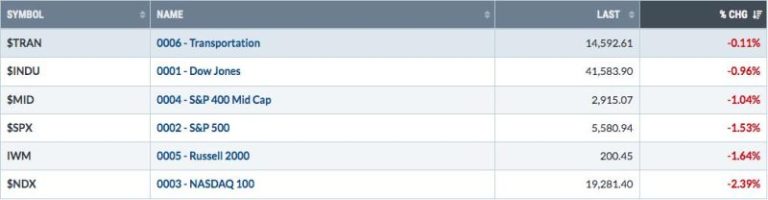
US equity markets fell even further this week. The S&P 500 (INDEXSP:INX) lost 2.4 percent to close at 5,5680.95, the Nasdaq 100 (INDEXNASDAQ:NDX) dropped 3.79 percent to 19,281.40 and the Dow Jones Industrial Average (INDEXDJX:.DJI) shed 1.41 percent to 41,583.91.

The gold price climbed to fresh all time highs this week gaining 2.02 percent to US$3,084.48 per ounce at 5:00 p.m. EDT Friday. The silver price rose higher with a 3.29 percent increase during the period to US$34.10.

In base metals, the copper price set an all time high of US$5.32 per pound on Wednesday before finishing the week flat to close out Friday at US$5.13 per pound on the COMEX. Meanwhile, the S&P GSCI (INDEXSP:SPGSCI) was up 0.41 percent to close at 560.50.

Top Canadian mining stocks this week

So how did mining stocks perform against this backdrop? We break down this week’s five best-performing Canadian mining stocks below.

Stock data for this article was retrieved at 2:00 p.m. EDT on Friday using TradingView’s stock screener. Only companies trading on the TSX, TSXV and CSE with market capitalizations greater than C$10 million are included. Companies within the non-energy minerals and energy minerals sectors were considered.

1. Euro Sun Mining (TSX:ESM)

Company Profile

Weekly gain: 53.85 percent
Market cap: C$30.94 million
Share price: C$0.10

Euro Sun Mining is a copper and gold development company focused on advancing its Rovina Valley project in Romania.

The project’s mining license received full approval for 20 years in 2018, with the option to renew it in five-year increments.

An updated feasibility study from March 2022 demonstrated the project’s economics, showing a post-tax net present value of US$512 million and an internal rate of return of 20.5 percent, assuming a base case gold price of US$1,675 per ounce and a copper price of US$3.75 per pound.

Proven and probable mineral reserve estimates for the site show contained quantities of 197,522 metric tons of copper with an average grade of 0.16 percent, along with 1.84 million ounces of gold with an average grade of 0.47 grams per metric ton (g/t) from 123.3 million metric tons of ore.

Although Euro Sun did not release news this week, shares increased alongside a rising copper price.

2. Rackla Metals (TSXV:RAK)

Company Profile

Weekly gain: 50 percent
Market cap: C$22.58 million
Share price: C$0.225

Rackla Metals is a gold exploration company with a significant land package covering 59,000 hectares in the Eastern Yukon and Western Northwest Territories, Canada. The firm is specifically targeting properties within the Tombstone Gold Belt, which hosts a gold system that tends to produce deposits in clusters.

Among its key projects is the Astro plutonic complex in the Northwest Territories, which is in close proximity to significant discoveries at Snowline Gold’s (TSXV:SGD,OTCQB:SNWGF) Rogue plutonic complex and Fireweed Metals’ (TSXV:FWZ,OTCQX:FWEDF) Macmillan Pass project.

Besides Astro, Rackla has been exploring its Grad property, which it initially staked in August 2024. Work at the 4,000 hectare site has focused on anomalies identified in a government regional geochemical survey. In October 2024, the company reported that grab samples from the BiTe zone yielded grades of up to 92 g/t gold in its season-end exploration update.

The company’s latest release came on Tuesday (March 24), when it announced a non-brokered private placement to raise total gross proceeds of C$2.45 million. The company intends to use proceeds to advance work at its Tombstone gold belt properties.

3. Tidewater Renewables (TSX:LCFS)

Company Profile

Weekly gain: 49.55 percent
Market cap: C$112.45 million
Share price: C$3.35

Tidewater Resources is focused on the production of low-carbon fuels from facilities in British Columbia, Canada.

Its sole operation is a renewable diesel and hydrogen complex located near Prince George. The project has a nameplate capacity of 3,000 barrels per day of renewable diesel and 23.7 metric tons per day of hydrogen. The plant began production during Q4 2023 using feedstock that included soybean and canola oil.

The company is expanding the site to produce sustainable aviation fuel, which it plans to start producing in 2028.

On March 6, Tidewater announced that it had advised the Canadian Border Services Agency (CBSA) to initiate an anti-subsidy and anti-dumping duty investigation into imports of renewable diesel from the US. The release indicated that the CBSA confirmed that Tidewater had provided sufficient evidence to support the allegations.

Tidewater expects that additional duties of between C$0.50 and C$0.80 will be applied to renewable diesel imports originating from the US, which would provide increased market stability for Tidewater products.

The company released its financial results for 2024 on Thursday, March 27. In the announcement, the company stated that its renewable diesel and hydrogen complex achieved an average daily throughput of 2,677 barrels per day in the fourth quarter, marking a significant increase from the 1,700 barrels per day throughput in Q4 2023.

4. Titan Mining (TSX:TI)

Company Profile

Weekly gain: 48.28 percent
Market cap: C$57.27 million
Share price: C$0.43

Titan Mining is a critical mineral mining and development company focused on advancing and exploring its zinc and graphite assets in New York, US.

Its Empire State Mines (ESM) zinc operations include ESM 4, which restarted production in January 2018, along with six past-producing mines capable of supplying additional feedstock for its onsite mill.

On January 7, Titan released an updated life of mine plan for its ESM properties, which projected a 35 percent increase in production compared to its previous plan released in 2021. The new plan extends the mine’s operational life to nine years, up from seven, and anticipates the production of 636 million pounds of zinc, increased from 470 million pounds in the prior plan.

In addition to zinc, the company also owns the Kilbourne graphite deposit located 4,000 feet from the existing mill at its Empire Mines operation.

A December 2024 maiden mineral resource estimate demonstrated an open pit inferred resource of 653,000 short tons of contained graphite from 22.42 million short tons of ore with an average grade of 2.91 percent copper.

Titan’s most recent news came on March 20, when it released its full-year 2024 results. In the announcement, the company stated it had achieved the upper end of production guidance with 59.5 million pounds of payable zinc. It also reported C1 cash costs of US$0.91 per payable pound sold, which was below the guidance range of US$0.98 to US$1.02.

5. Supernova Metals (CSE:SUPR)

Company Profile

Weekly gain: 39.71 percent
Market cap: C$14.1 million
Share price: C$0.475

Supernova Metals is an exploration company with rare earth mineral claims in Newfoundland and Labrador, Canada, as well as petroleum interests in Namibia.

Its TT rare earth claims comprise two licenses spanning 825 hectares in central Labrador and are adjacent to Canada Rare Earth’s (TSXV:LL,OTC Pink:RAREF) Two Tom project. The company shared plans to begin exploration in February.

In addition to its TT Claims, the company announced on January 31 that it had successfully completed its acquisition of NamLith Resources. The purchase provides Supernova with an 8.75 percent indirect ownership interest in Block 2712A and petroleum exploration license 107 in Namibia’s offshore Orange Basin.

In a follow-up on February 6, Supernova reported that a NI51-101 technical report is being prepared for the block. The company has since added two senior strategic advisors with experience in the energy industry.

The company has not released any project updates in the past week.

FAQs for Canadian mining stocks

What is the difference between the TSX and TSXV?

The TSX, or Toronto Stock Exchange, is used by senior companies with larger market caps, and the TSXV, or TSX Venture Exchange, is used by smaller-cap companies. Companies listed on the TSXV can graduate to the senior exchange.

How many companies are listed on the TSXV?

As of June 2024, there were 1,630 companies listed on the TSXV, 925 of which were mining companies. Comparatively, the TSX was home to 1,806 companies, with 188 of those being mining companies.

Together the TSX and TSXV host around 40 percent of the world’s public mining companies.

How much does it cost to list on the TSXV?

There are a variety of different fees that companies must pay to list on the TSXV, and according to the exchange, they can vary based on the transaction’s nature and complexity. The listing fee alone will most likely cost between C$10,000 to C$70,000. Accounting and auditing fees could rack up between C$25,000 and C$100,000, while legal fees are expected to be over C$75,000 and an underwriters’ commission may hit up to 12 percent.

The exchange lists a handful of other fees and expenses companies can expect, including but not limited to security commission and transfer agency fees, investor relations costs and director and officer liability insurance.

These are all just for the initial listing, of course. There are ongoing expenses once companies are trading, such as sustaining fees and additional listing fees, plus the costs associated with filing regular reports.

How do you trade on the TSXV?

Investors can trade on the TSXV the way they would trade stocks on any exchange. This means they can use a stock broker or an individual investment account to buy and sell shares of TSXV-listed companies during the exchange’s trading hours.

Article by Dean Belder; FAQs by Lauren Kelly.

Securities Disclosure: I, Dean Belder, hold no direct investment interest in any company mentioned in this article.

Securities Disclosure: I, Lauren Kelly, hold no direct investment interest in any company mentioned in this article.

This post appeared first on investingnews.com

Quimbaya Gold Inc. (CSE: QIM) (OTCQB: QIMGF) (FSE: K05) (‘Quimbaya Gold’ or the ‘Company’) is pleased to announce that shareholders voted to approve all items of business put forth to shareholders at the Company’s Annual General and Special Meeting (‘AGSM’) held on March 28, 2025, including the election of directors, fixing the number of directors, appointment of the Company’s auditor, approval of the equity incentive plan, and the continuation of the Company under the British Columbia Business Corporations Act.

The board of directors and the Company would like to thank Mr. Bayona, who did not run for re-election, for his service to the Company and would like to wish him well in his future endeavors.

Additionally, at the AGSM, Sebastian Wahl was elected as new independent director of the Company. Sebastian Wahl brings over 15 years of experience in the mining industry, specializing in precious metals trading and corporate development. As a co-founder and former Vice President of Corporate Development at Silver X Mining Corp., he played a pivotal role in consolidating assets and advancing projects in South America. Mr. Wahl holds a B.Sc. in Business Administration from the Graduate School of Business Administration in Zurich and a Financial Modelling certification from the Corporate Finance Institute. Fluent in Spanish, he possesses extensive expertise in South American mining operations and capital markets.

Mr. Alexandre P. Boivin, President & CEO stated, ‘We are excited to bring Sebastian on as an independent board member. His strong experience in South America and European connections will complement the Company as we strive to become an established player in the Colombian mining exploration space.’

About Quimbaya

Quimbaya aims to discover gold resources through exploration and acquisition of mining properties in the prolific mining districts of Colombia. Managed by an experienced team in the mining sector, Quimbaya is focused on three projects in the regions of Segovia (Tahami Project), Puerto Berrio (Berrio Project), and Abejorral (Maitamac Project), all located in Antioquia Province, Colombia.

Contact Information

Alexandre P. Boivin, President and CEO apboivin@quimbayagold.com
Jason Frame, Manager of Communications jason.frame@quimbayagold.com

Quimbaya Gold Inc.
Follow on X @quimbayagoldinc
Follow on LinkedIn @quimbayagold
Follow on Instagram @quimbayagoldinc
Follow on Facebook @quimbayagoldinc

Cautionary Statements

Certain statements contained in this press release constitute ‘forward-looking information’ as that term is defined in applicable Canadian securities legislation. All statements, other than statements of historical fact, included herein are forward-looking information. Generally, forward-looking statements and information can be identified by the use of forward-looking terminology such as ‘intends’, ‘expects’ or ‘anticipates’, or variations of such words and phrases or statements that certain actions, events or results ‘may’, ‘could’, ‘should’, ‘would’ or ‘occur’. Forward-looking information by its nature is based on assumptions and involve known and unknown risks, uncertainties and other factors which may cause the actual results, performance or achievements of Quimbaya to be materially different from any future results, performance or achievements expressed or implied by such forward-looking statements or information. Although Quimbaya’s management believes that the assumptions made and the expectations represented by such information are reasonable, there can be no assurance that the forward-looking information will prove to be accurate. Furthermore, should one or more of the risks, uncertainties or other factors materialize, or should underlying assumptions prove incorrect, actual results may vary materially from those described in forward-looking statements or information. Readers are cautioned not to place undue reliance on forward-looking information as there can be no assurance that the plans, intentions or expectations upon which they are placed will occur. Forward-looking information contained in this news release is expressly qualified by this cautionary statement. The forward-looking information contained in this news release represents the expectations of Quimbaya as of the date of this news release and, accordingly, is subject to change after such date. Except as required by law, Quimbaya does not expect to update forward-looking statements and information continually as conditions change.

Neither the Canadian Securities Exchange nor its regulation services provider accepts responsibility for the adequacy or accuracy of this release.

To view the source version of this press release, please visit https://www.newsfilecorp.com/release/246745

News Provided by Newsfile via QuoteMedia

This post appeared first on investingnews.com

Brazil-focused explorer Alvo Minerals (ASX:ALV,OTC Pink:ALVMF) has signed a non-binding letter of intent with Pan American Silver (TSX:PAAS,NYSE:PAAS) to acquire the Lavra Velha gold-copper project.

According to Alvo, the project and surrounding exploration ground were considered by Pan American to be ‘non-core’ after the company completed its acquisition of Yamana Gold in 2022.

Mineralization was discovered at Lavra Velha in 2010, and the site was explored from 2010 to 2013, and then from 2018 to 2022. The project covers 55,000 hectares in Brazil’s Bahia state.

Lavra Velha has a NI 43-101 resource estimate of 9.2 million tonnes at 1.76 grams per tonne (g/t) gold for 520,000 ounces. That includes an indicated resource of 4.5 million tonnes at 1.96 g/t gold for 282,000 ounces, as well as an inferred resource of 4.7 million tonnes at 1.56 g/t gold for 238,000 ounces.

“We are very excited about the proposed acquisition of the Lavra Velha Gold-Copper Project,’ Alvo Managing Director Rob Smakman said in a Monday (March 31) announcement, adding that the property is complementary to the company’s Palma copper-zinc project. He also commented positively on current gold and copper market dynamics.

The company plans to update Lavra Velha’s NI 43-101 resource to meet JORC standards. Among other adjustments, it will use the current gold price instead of the previous US$1,650 per ounce price.

As part of the acquisition plan, Alvo will be opening an entitlement offer to raise up to AU$3.5 million among its shareholders, with each share priced at AU$0.06. Once raised, the amount is proposed to cover the US$1 million upfront cash payment portion of the transaction, along with initial exploration of Lavra Velha.

The entitlement offer is set to open to eligible Alvo shareholders on Friday (April 4).

Completion of the transaction with Pan American is subject to Alvo’s satisfaction of due diligence and the execution of an asset purchase agreement. The due diligence completion has a 45 day exclusivity period.

Shares of Alvo rose as high as AU$0.066 following the announcement, up 10 percent from the firm’s previous AU$0.06 close. Pan American finished at US$25.55, a 1.47 percent dip from its US$25.94 close last week.

According to Global Business Reports’ Brazil Mining 2024 report, mining in Brazil continues to be fueled by iron ore, but is slowly seeing diversification through a growing number of gold, rare earths and lithium projects.

Securities Disclosure: I, Gabrielle de la Cruz, hold no direct investment interest in any company mentioned in this article.

This post appeared first on investingnews.com