Author

admin

Browsing

Will First Majestic Silver CEO’s silver price prediction of more than US$100 per ounce come true?

The silver spot price made waves in 2020 when it rose above US$20 per ounce for the first time in four years, and the precious metal has repeatedly tested US$30 per ounce since.

Since September of 2024, silver has held above US$30, and on October 22 the silver price reached a 12-year high when it came close to breaking through the US$35 mark. While it fell back by November, the US$30 level has served as a floor.

Well-known figure Keith Neumeyer, CEO of First Majestic Silver (TSX:FR,NYSE:AG), has frequently said he believes the white metal could climb even further, to hit the US$100 mark or even reach as high as US$130 per ounce.

Neumeyer has voiced this opinion often in recent years. He put up a US$130 price target in a November 2017 interview with Palisade Radio, and he also discussed it in an August 2022 interview with Wall Street Silver. He has reiterated his triple-digit silver price forecast in multiple interviews with Kitco over the years, as recently as March 2023.

In 2024, Neumeyer has made his US$100 call in a conversation with ITM Trading’s Daniela Cambone at the Prospectors & Developers Association of Canada (PDAC) convention; and in April he acknowledged his reputation as the ‘triple-digit silver guy’ on the Todd Ault Podcast.

He believes silver could hit US$100 due to a variety of factors, including its consistent deficit, its industrial demand and how undervalued it is compared to gold.

At times he’s been even bolder, suggesting in 2016 that silver could reach US$1,000 if gold were to hit US$10,000. More recently, his expected timeline for US$100 silver has been pushed back, but he remains very bullish on the metal in the long term.

In order to better understand where Neumeyer’s opinion comes from and whether a triple-digit silver price is really in the cards, it’s important to take a look at the factors that affect the metal’s movements, as well as where prices have been in the past and where other industry insiders think silver could be headed. First, let’s dive a little deeper into Neumeyer’s US$100 prediction.

In this article

    Why is Neumeyer calling for a US$100 silver price?

    There’s a significant distance for silver to go before it reaches the success Neumeyer has boldly predicted. In fact, in order for the precious metal to jump to the US$100 mark, its price would have to increase from its current value by around 200 percent.

    Neumeyer has previously stated that he expects a triple-digit silver price in part because he believed the market cycle could be compared to the year 2000, when investors were sailing high on the dot-com bubble and the mining sector was down. He thinks it’s only a matter of time before the market corrects, like it did in 2001 and 2002, and commodities see a big rebound in pricing. It was during 2000 that Neumeyer himself invested heavily in mining stocks and came out on top.

    “I’ve been calling for triple-digit silver for a few years now, and I’m more enthused now,” Neumeyer said at an event in January 2020, noting that there are multiple factors behind his reasoning. “But I’m cautiously enthused because, you know, I thought it would have happened sooner than it currently is happening.”

    In his August 2022 with Wall Street Silver, he reiterated his support for triple-digit silver and said he’s fortunately not alone in this optimistic view — in fact, he’s been surpassed in that optimism. ‘I actually saw someone the other day call for US$500 silver,’ he said. ‘I’m not quite sure I’m at the level. Give me US$50 first and we’ll see what happens after that.’

    Another factor driving Neumeyer’s position is his belief that the silver market is in a deficit. In a May 2021 interview, when presented with supply-side data from the Silver Institute indicating the biggest surplus in silver market history, Neumeyer was blunt in his skepticism. “I think these numbers are made up,” he said. “I wouldn’t trust them at all.”

    He pointed out that subtracting net investments in silver exchange-traded products leaves the market in a deficit, and also questioned the methodology behind the institute’s recycling data given that most recycled silver metal comes from privately owned smelters and refineries that typically don’t make those figures public.

    ‘I’m guessing the mining sector produced something in the order of 800, maybe 825 million ounces in 2022,’ Neumeyer said when giving a Q4 2022 overview for his company. ‘Consumption numbers look like they’re somewhere between 1.2 and 1.4 billion ounces. That’s due to all the great technologies, all the newfangled gadgets that we’re consuming. Electric vehicles, solar panels, windmills, you name it. All these technologies require silver … that’s a pretty big (supply) deficit.’

    In a December 2023 interview with Kitco, Neumeyer stressed that silver is more than just a poor man’s gold and he spoke to silver’s important role in electric vehicles and solar cells.

    In line with its view on silver, First Majestic is a member of a consortium of silver producers that in January 2024 sent a letter to the Canadian government urging that silver be recognized as a critical mineral. Silver’s inclusion on the list would allow silver producers to accelerate the development of strategic projects with financial and administrative assistance from the Canadian government. Canada’s critical minerals list is expected to get an update in the summer of 2024.

    In his 2024 PDAC interview, Neumeyer once again highlighted this sizable imbalance in the silver’s supply-demand picture. “We’re six years into this deficit. The deficit in 2024 looks like it’s gonna be bigger than 2023, and why is that? Because miners aren’t producing enough silver for the needs of the human race,” he said.

    More controversially, Neumeyer is of the opinion that the white metal will eventually become uncoupled from its sister metal gold, and should be seen as a strategic metal due to its necessity in many everyday appliances, from computers to electronics, as well as the technologies mentioned above. He has also stated that silver production has gone down in recent years, meaning that contrary to popular belief, he believes the metal is actually a rare commodity.

    Neumeyer’s March 2023 triple-digit silver call is a long-term call, and he explained that while he believes gold will break US$3,000 this year, he thinks silver will only reach US$30 in 2023. However, once the gold/silver ratio is that unbalanced, he believes that silver will begin to take off, and it will just need a catalyst.

    ‘It could be Elon Musk taking a position in the silver space,’ Neumeyer said. ‘There’s going to be a catalyst at some time, and headlines in the Wall Street Journal might talk about the silver supply deficit … I don’t know what the catalyst will be, but investors and institutions will wake up to the fundamentals of the metal, and that’s when it will start to move.’

    In an August 2023 interview with SilverNews, Neumeyer discussed his belief that banks are holding the silver market down. He pointed to the paper market for the metal, which he said the banks have capped at US$30 even in times of high buying.

    ‘If you want to go and buy 100 billion ounces of silver (in the paper market), you might not even move the price because some bank just writes you a contract that says (you own that),’ he explained, saying banks are willing to get short, because once the buying stops, they push the price down to get the investors out of the market and buy the silver back. ‘… If the miners started pulling their metal out of the current system, then all of a sudden the banks wouldn’t know if they’re going to get the metal or not, so they wouldn’t be taking the same risks they’re taking today in the paper markets.’

    The month after the interview, his company First Majestic launched its own 100 percent owned and operated minting facility, named First Mint.

    In 2024, gold experienced a resurgence in investor attention as the potential for Fed rate cuts came into view. In his interview with Cambone at PDAC 2024, Neumeyer countered that perception, stating, “There’s a rush into gold because of the de-dollarization of the world. It has nothing to do with the interest rates.”

    What factors affect the silver price?

    In order to glean a better understanding of the precious metal’s chances of trading around the US$100 range, it’s important to examine the elements that could push it to that level or pull it further away.

    The strength of the US dollar and US Federal Reserve interest rate changes are factors that will continue to affect the precious metal, as are geopolitical issues and supply and demand dynamics. Although Neumeyer believes that the ties that bind silver to gold need to be broken, the reality is that most of the same factors that shape the price of gold also move silver.

    For that reason, it’s helpful to look at gold price drivers when trying to understand silver’s price action. Silver is, of course, the more volatile of the two precious metals, but nevertheless it often trades in relative tandem with gold.

    Looking first at the Fed and interest rates, it’s useful to understand that higher rates are generally negative for gold and silver, while lower rates tend to be positive. That’s because when rates are higher interest shifts to products that can accrue interest.

    When the COVID-19 pandemic hit, the Fed cut rates down to zero from 1 to 1.25 percent. However, rising inflation led the Fed and other central banks to hike rates, which negatively impacted gold and silver. In February 2023, the Fed raised rates by just 25 basis points, the smallest hike since March 2022, as Chair Jerome Powell said the process of disinflation has begun. The Fed continued these small rate hikes over the next year with the last in July 2023.

    In this leg of the upward cycle of the silver market, Fed interest rate moves have played an oversized role in pumping up silver prices. In early July, as analysts factored in the rising potential for interest rate cuts in the remainder of 2024, silver prices were once again testing May’s nearly 12-year high, and they topped US$31 in September in the days leading up to the anticipated first rate cut.

    While central bank actions are important for gold, and by extension silver, another key price driver lately has been geopolitical uncertainty. The past few years have been filled with major geopolitical events such as tensions between the US and other countries such as North Korea, China and Iran. The huge economic impact of the COVID-19 pandemic, the banking crisis in early 2023, Russia’s ongoing war with Ukraine, and rising tensions in the Middle East brought about by the Israel-Hamas war have been sources of concern for investors.

    More recently, US President Donald Trump’s penchant for tariffs has rattled stock markets and ratcheted up the level of economic uncertainty pervading the market landscape in 2025. This has proved price positive for gold, bringing silver along for the ride.

    However, silver’s industrial side can not be ignored. In the current environment, the industrial case of silver is weakening in the short term; but longer term still holds some prospects for larger gains.

    Higher industrial demand from emerging sectors due to factors like the transition to renewable energy and the emergence of AI technology will be highly supportive for the metal over the next few years. Solar panels are an especially exciting sector as manufacturers have found increasing the silver content increases energy efficiency.

    Could silver hit US$100 per ounce?

    While we can’t know if we’ll reach a $100 per ounce silver price in the near future, there is support for Neumeyer’s belief that the metal is undervalued and that “ideal conditions are present for silver prices to rise.”

    Many are on board with Neumeyer in the idea that silver’s prospects are bright, including Peter Krauth of Silver Stock Investor, who believes that ‘we are very likely going to experience the greatest silver bull market of our generation.’

    So, if the silver price does rise further, how high will it go?

    Let’s look at silver’s recent history. The highest price for silver was just under US$50 in the 1970s, and it came close to that level again in 2011. The commodity’s price uptick came on the back of very strong silver investment demand. While it has yet to reach these levels again, the silver price has increased significantly in recent years.

    After spending the latter half of the 2010s in the teens, the 2020s have seen silver largely hold above US$20. In August 2020, the price of silver reached nearly US$28.50 before pulling back again, and moved back up near those heights in February 2021. The price of silver saw a 2022 high point of US$26.46 in February, and passed US$26 again in both May and November 2023.

    Silver rallied in the later part of the first quarter of 2024, and by April 12 was once again flirting with the US$30 mark as it reached an 11 year high of US$29.26. Despite a brief pull back to the US$26 level, the month of May saw the silver price take another run at US$30, this time successfully pushing into US$32 territory on May 19. Silver prices experienced volatility for much of the third quarter, ranging from a high of US$31.39 on July 11 to a low of US$26.64 on August 7.

    The price of silver had a nice run in late October of 2024 in the lead up to the election, rising up to US$34.80 on October 22. However, a stronger dollar and signs that the Federal reserve may not be so quick to cut interest rates as deeply as previously expected were seen as price negative for silver. The precious metal’s price was in a downward slide for much of November.

    Fed Chair Jerome Powell has ‘indicated that the central bank is in no rush to lower rates, citing a strong economy, a solid labor market, and persistent inflation,’ according to Trading Economics. ‘Silver also faced additional pressure from Donald Trump’s election victory, as markets anticipated inflationary policies and a more aggressive stance toward China, which could dampen demand for the metal.’

    For much of the first quarter of 2025, silver has followed gold higher on factors including persistent inflationary pressures brought on by Trump’s aggressive tariff announcements and the ongoing geopolitical risks in the Middle East.

    As of March 31, 2025, the price of silver was above the US$34 mark, up almost 16 percent since the beginning of the year.

    What do other experts think about US$100 silver?

    Many experts in the space expect silver to perform strongly in the years to come, but don’t necessarily see it reaching US$100 or more, especially given the current macroeconomic conditions.

    ‘As I was doing my research, and this goes back over several years already, I would get to that US$300 forecast for an ultimate high in the silver price in different ways,’ he said, and broke down what a low gold/silver ratio — like we’ve seen the previous times that silver has peaked — could mean for the metal’s price in the future.

    Breaking through the historic US$50 ceiling will likely happen in quick, sharp daily spikes in the modern AI trading environment, he said, and it could potentially be ‘the first step’ toward even higher silver prices, including $100 silver. ‘The key is that people really fully understand and appreciate the actual (supply) deficit of silver,’ Lin noted.

    Analyst firm InvestingHaven is very bullish on the silver market and is expecting prices to test all-time highs in 2025, moving as high as US$49 per ounce, before blasting through new records in the next few years. InvestingHaven even sees the precious metal reaching as high as US$77 in 2027 and US$82 by 2030.

    FAQs for silver

    Can silver hit $1,000 per ounce?

    In 2016, Neumeyer predicted that silver could hit $1,000 per ounce if gold ever climbed to US$10,000 per ounce. This is related to the gold to silver production ratio discussed above, which at the time of the prediction was around 1 ounce of gold to 9 ounces of silver and last year was about 1:8.3.

    If silver was priced according to production ratio today, when gold is at US$2,000 silver would be around US$240, or US$222 at 1:9. However, the gold to silver pricing ratio has actually sat around 1:80 to 1:90 recently, and when gold moved above US$2,400 in May 2024, silver was around US$32. Additionally, even if pricing did change drastically to reflect production rates, gold would need to climb by more than 300 percent from its current price to hit the US$10,000 Neumeyer mentioned back in 2016.

    As things are now, it seems unlikely silver will reach those highs.

    Why is silver so cheap?

    The primary reason that silver is sold at a significant discount to gold is supply and demand, with more silver being mined annually. While silver does have both investment and industrial demand, the global focus on gold as an investment vehicle, including countries stockpiling gold, can overshadow silver. Additionally, jewelry alone is a massive force for gold demand.

    There is an abundance of silver — according to the US Geological Survey, to date 1,740,000 metric tons (MT) of silver have been discovered, while only 244,000 MT of gold have been found, a ratio of about 1 ounce of gold to 7.1 ounces of silver. In terms of output, 25,000 MT of silver were mined in 2024 compared to 3,300 MT for gold. Looking at these numbers, that puts gold and silver production at about a 1:7.5 ratio last year, while the price ratio on March 31, 2025, was around 1:92 — a huge disparity.

    Is silver really undervalued?

    Many experts believe that silver is undervalued compared to fellow currency metal gold. As discussed, their production and price ratios are currently incredibly disparate.

    While investment demand is higher for gold, silver has seen increasing time in the limelight in recent years, including a 2021 silver squeeze that saw new entrants to the market join in.

    Another factor that lends more intrinsic value to silver is that it’s an industrial metal as well as a precious metal. It has applications in technology and batteries — both growing sectors that will drive demand higher.

    Silver’s two sides has been on display in recent years: Silver demand hit record highs in 2022, according to the Silver Institute, with physical silver investment rising by 22 percent and industrial by 5 percent over 2021. For 2023, industrial demand was up 11 percent over the previous year, compared to 28 percent decline in physical silver investment.

    Is silver better than gold?

    There are merits for both metals, especially as part of a well-balanced portfolio. As many analysts point out, silver has been known to outperform its sister metal gold during times of economic prosperity and expansion.

    On the other hand, during economic uncertainty silver values are impacted by declines in fabrication demand.

    Silver’s duality as a precious and industrial metal also provides price support. As a report from the CPM Group notes, “it can be seen that silver in fact almost always (but not always) out-performs gold during a gold bull market.”

    At what price did Warren Buffet buy silver?

    Warren Buffett’s Berkshire Hathaway (NYSE:BRK.A,NYSE:BRK.B) bought up 37 percent of global silver supply between 1997 and 2006. Silver ranged from US$4 to US$10 during that period.

    In fact, between July 1997 and January 1998 alone, the company bought about 129 million ounces of the metal, much of which was for under US$5. Adjusted for inflation, the company’s purchases in that window cost about US$8.50 to US$11.50.

    How to invest in silver?

    There are a variety of ways to get into the silver market. For example, investors may choose to put their money into silver-focused stocks by buying shares of companies focused on silver mining and exploration. As a by-product metal, investors can also gain exposure to silver through some gold companies.

    There are also silver exchange-traded funds that give broad exposure to silver companies and the metal itself, while more experienced traders may be interested in silver futures. And of course, for those who prefer a more tangible investment, purchasing physical bullion in silver bar and silver coin form is also an option.

    Securities Disclosure: I, Melissa Pistilli, hold no direct investment interest in any company mentioned in this article.

    This post appeared first on investingnews.com

    1911 Gold Corporation (‘ 1911 Gold ‘ or the ‘ Company ‘) (TSXV: AUMB; OTCBB: AUMBF; FRA: 2KY) is pleased to announce the assay results from eight (8) drill holes for 1,672.0 metres (‘m’) from the ongoing surface drill program at the recently discovered San Antonio Southeast target at the True North Project. The True North project, including a permitted mill, camp, and tailings facility, is centrally located on the Company’s 100%-owned Rice Lake Gold property in southeast Manitoba, Canada .

    Highlights:

    • Drilling has continued to expand the near-surface quartz vein hosted gold (‘Au’) mineralization on the recently discovered San Antonio Southeast (‘SAM SE’) target

    San Antonio Southeast Target

    • Drill results confirmed the southeastern extension of gold mineralization within the prolific San Antonio mafic unit to depths of over   400 m and along strike for over 500 m , including:
      • TN-25-034: Intersected 7.13 grams per tonne (g/t) Au over 2.10 m at a downhole depth of 99.00 m including 12.80 g/t Au over 1.00 m , 7.67 g/t Au over 1.00 m at a downhole depth of 139.70 m , and 14.97 g/t Au over 2.70 m at a downhole depth of 145.00 m including 71.60 g/t Au over 0.50 m
      • TN-25-033A: Intersected 7.71 g/t Au over 1.80 m at a downhole depth of 94.00 m , 7.05 g/t Au over 3.10 m at a downhole depth of 102.00 m including 16.50 g/t Au over 1.20 m , and 5.34 g/t Au over 6.00 m at a downhole depth of 121.50 m including 7.32 g/t Au over 1.20 m and 8.58 g/t Au over 1.10 m
      • TN-25-027: Intersected 18.80 g/t Au over 0.70 m at a down-hole depth of 27.90 m extending mineralization over a strike length of 50 m to the east of hole TN-24-023
      • TN-25-019: Intersected 13.20 g/t Au over 0.50 m at a down-hole depth of 253.00 m , extending mineralization over 125 m to the east of hole TN-24-011
      • TN-25-027: Intersected 18.80 g/t Au over 0.70 m at a down-hole depth of 27.90 m , extending mineralization over an additional strike length of 50 m from TN-24-023
      • TN-25-028: Intersected 8.36 g/t Au over 0.80 m at a downhole depth of 48.80 m , a 50 m down plunge extension of hole TN-24-027
      • TN-25-030: Intersected 8.78 g/t Au over 0.80 m at a downhole depth of 165.30 m , an 80 m down plunge extension from hole TN-24-021

    Shaun Heinrichs , CEO and President, stated, ‘These latest results confirm the discovery of the SAM Southeast target as a parallel ore shoot similar to the San Antonio Mine vein system with the potential to have the same down-dip extension. These parallel systems are exactly what our geology team, under Michele Della Libera’s leadership, are targeting – a repetition of mineralization, starting on surface and extending to depth, as a result of multiple east-west shear veins intersecting with the favourable host rocks identified at the True North project. The historical discovery of the Hinge, Cohiba, and 007 mines show the potential for a number of additional stacked systems, with our current drill program designed to test a number of new targets with similar significant potential.’

    1911 Gold has now completed thirty-one (31) surface drill holes, for a total of 7,216.4 m . The current drill program commenced in October 2024 and remains ongoing with new targets being generated and drill tested within prospective host rock, and structural settings, including significant historical results. The program is ongoing and planned to include up to 30,000 m of drilling by the end of 2025.

    San Antonio Southeast target: Discussion of Results

    Drilling completed to date has confirmed the extensions of gold mineralization within the SAM gabbro to over 500 m southeast of the historically mined San Antonio zone, covering an area 400 m long and over 550 m to depth. Twenty-one (21) drill holes for a total of 4,894.40 m have been completed to date on the SAM SE target area. Three drill holes were abandoned without reaching target depth due to ground conditions.

    The latest drill holes extended the footprint of mineralization another 200 m to the southeast. The drilling completed to date on the SAM SE target confirmed the presence of a vein system parallel to the San Antonio Mine ore body, which has the same geological, alteration and mineralization characteristics. The high-grade gold intercepts in the drill holes released are also enhancing our confidence to define higher grade zones within the target area both along strike and down plunge. Further data interpretation will support the planning refinement for the next phase of exploration drilling, which will be focused on deeper drilling to properly define the potential extension of the zone. The mineralized intercepts are characterized by quartz-carbonate shear veins and vein breccias with sericite, chlorite alteration and up to 2% pyrite disseminated and in veinlets developed in association with northeast and northwest trending sub-vertical shear zones.

    Table 1: Select Significant Drill Hole Assay Results

    Target Area

    (name)

    Drill Hole

    (number)

    From
      (m)

    To
      (m)

    Interval

    (m)

    Au

    (g/t)

    SAM Southeast

    TN-25-019

    253.00

    253.50

    0.50

    13.20

    SAM Southeast

    TN-25-027

    27.90

    28.60

    0.70

    18.80

    SAM Southeast

    TN-25-028

    46.90

    51.30

    4.40

    3.12

    Including

    46.90

    49.60

    2.70

    4.20

    and

    48.80

    49.60

    0.80

    8.36

    SAM Southeast

    TN-25-030

    154.30

    155.30

    1.00

    3.53

    162.40

    166.10

    3.70

    3.27

    Including

    162.40

    164.30

    1.90

    3.79

    and

    165.30

    166.10

    0.80

    8.78

    179.00

    180.00

    1.00

    3.16

    SAM Southeast

    TN-25-033A

    94.00

    95.80

    1.80

    7.71

    102.00

    105.10

    3.10

    7.05

    Including

    102.00

    103.20

    1.20

    16.50

    119.60

    125.60

    6.00

    5.34

    Including

    121.50

    122.70

    1.20

    7.32

    and

    123.70

    124.80

    1.10

    8.58

    SAM Southeast

    TN-25-034

    99.00

    101.10

    2.10

    7.13

    Including

    99.00

    100.00

    1.00

    12.80

    136.50

    140.70

    4.20

    2.49

    Including

    139.70

    140.50

    1.00

    7.67

    145.00

    147.70

    2.70

    14.97

    Including

    145.00

    145.50

    0.50

    71.60

    1)

    Intercepts above a cut-off grade of 2.25 g/t Au

    2)

    Maximum of 2.50 m internal dilution and no top capping applied

    3)

    Intervals represent drill core length and are considered to represent 60% to 90% of true widths

    4)

    Full Significant Assay Results included in Table 2

    5)

    Drill hole Information included in Table 3

    San Antonio Southeast Target

    The San Antonio Southeast target is located approximately 350m southeast of the historically mined San Antonio zone of the True North Gold Mine. The San Antonio Southeast target occurs within the gabbro of the San Antonio mafic unit and the intersection with the L-10 shear zone. The SAM gabbro hosts the majority of the known gold mineralization within the True North Mine and historically produced 1,309,351 ounces Au at an average grade of 9.33 g/t Au. The SAM SE target also hosts the 710-711 vein system at depth, which contains a mineral resource of 198,000 oz Au @ 5.21 g/t Au indicated and 118,000 oz Au @ 3.91 g/t Au ( see press release dated November 20, 2024 , ‘1911 Gold Announces Mineral Resource Estimate Update for the True North Gold Project’ ) located on the ’26 Level’ of the True North underground mine at a depth approximately 1,000 m down-dip of the current drilling. The L-10 shear zone also hosts a gold mineralized vein system within the parallel Shoreline Basalt unit containing 58,000 oz Au @ 4.99 g/t Au indicated and 61,000 oz @ 3.96 g/t Au inferred resources (See Figure 2).

    Next Steps

    With the continued intersection of good gold mineralization in step-out drilling of near surface targets at the True North Gold Mine complex in the San Antonio West, Hinge East and San Antonio Southeast target areas, 1911 Gold is continuing to test new targets as well as expand the footprint of the newly discovered zones. The program’s ongoing success has expanded the current drill program to comprise over 30,000 m of drilling. Two drill rigs have been operating on the property to test the open extensions at San Antonio West and San Antonio Southeast as well as other new targets.

    Table 3: True North; Drill Hole Details

    Drill Hole (Number)

    `Target

    (Name)

    Northing*          (m)

    Easting*   (m)

    Elevation             (masl)

    Azimuth (°)

    Inclination (°)

    Depth (m)

    TN-25-018

    SAM-Southeast

    5655444

    312790

    252

    175

    -45

    269.0

    TN-25-019

    SAM-Southeast

    5655444

    312790

    252

    156

    -45

    323.0

    TN-25-020

    SAM Southeast

    5655311

    312609

    251

    156

    -49

    131.0

    TN-25-027

    SAM Southeast

    5655325

    312562

    290

    113

    -53

    128.0

    TN-25-028

    SAM Southeast

    5655416

    312542

    258

    164

    -58

    155.0

    TN-25-030

    SAM Southeast

    5655470

    312610

    256

    163

    -47

    230.0

    TN-25-031

    SAM Southeast

    5655470

    312610

    256

    155

    -62

    242.0

    TN-25-033A

    SAM Southeast

    5655466

    312612

    256

    185

    -45

    194.0

    *

    Coordinates are provided in UTM NAD83 Zone 15

    Qualified Person Statement

    The scientific and technical information in this news release has been reviewed and approved by Mr. Michele Della Libera , P.Geo, Vice-President Exploration of 1911 Gold, who is a ‘Qualified Person’ as defined under NI 43-101.

    Table 2: True North; Significant Drill Hole Assays

    Target Area

    (name)

    Drill Hole

    (number)

    From
    (
      m)

    To
      (m)

    Interval

    (m)

    Au

    (g/t)

    SAM Southeast

    TN-25-019

    253.00

    253.50

    0.50

    13.20

    SAM Southeast

    TN-25-020

    60.10

    60.80

    0.70

    2.37

    SAM Southeast

    TN-25-027

    27.90

    28.60

    0.70

    18.80

    SAM Southeast

    TN-25-028

    46.90

    51.30

    4.40

    3.12

    Including

    46.90

    49.60

    2.70

    4.20

    and

    48.80

    49.60

    0.80

    8.36

    SAM Southeast

    TN-25-030

    152.20

    153.30

    1.10

    1.15

    154.30

    155.30

    1.00

    3.53

    154.30

    155.30

    1.00

    3.53

    162.40

    166.10

    3.70

    3.27

    Including

    162.40

    164.30

    1.90

    3.79

    and

    165.30

    166.10

    0.80

    8.78

    179.00

    180.00

    1.00

    3.16

    SAM Southeast

    TN-25-031

    138.80

    141.50

    2.70

    1.11

    182.20

    183.20

    1.00

    1.03

    SAM Southeast

    TN-25-033A

    94.00

    95.80

    1.80

    7.71

    102.00

    105.10

    3.10

    7.05

    Including

    102.00

    103.20

    1.20

    16.50

    107.00

    108.50

    1.50

    1.81

    111.50

    113.00

    1.50

    0.93

    117.50

    119.00

    1.50

    0.80

    119.60

    125.60

    6.00

    5.34

    Including

    121.50

    122.70

    1.20

    7.32

    and

    123.70

    124.80

    1.10

    8.58

    179.30

    180.50

    1.20

    1.57

    SAM Southeast

    TN-25-034

    82.40

    84.10

    1.70

    1.18

    99.00

    101.10

    2.10

    7.13

    Including

    99.00

    100.00

    1.00

    12.80

    101.90

    102.40

    0.50

    1.83

    105.00

    105.70

    0.70

    1.58

    132.20

    133.60

    1.40

    2.25

    136.50

    142.30

    5.80

    2.20

    Including

    136.50

    140.70

    4.20

    2.49

    Including

    139.70

    140.70

    1.00

    7.67

    145.00

    147.70

    2.70

    14.97

    Including

    145.00

    145.50

    0.50

    71.60

    Quality Assurance/Quality Controls (QA/QC)

    Core samples are collected by sawing the drill core in half along the axis, with one-half sampled, placed in plastic sample bags, labelled, sealed and the other half retained for future reference. Batches are shipped to Activation Laboratories Ltd. (Actlabs), in Thunder Bay, Ontario for sample preparation and analysis. Gold analysis is completed by fire-assay with an atomic absorption finish on 50 grams of prepared pulp. Samples returning values greater or equal to 5.00 g/t are reanalysed by fire assay with a gravimetric finish. Total gold analysis (Screen Metallic Sieve) is conducted on highly mineralized samples or the presence of visible gold. Certified gold reference material samples are inserted every 20 samples and blank samples at intervals of one in every 50 samples, with additional blanks inserted after samples hosting visible gold. Repeat third-party gold analyses for 5% of all submitted sample pulps are analyzed at ALS-Chemex Laboratory, North Vancouver, Canada .

    About 1911 Gold Corporation

    1911 Gold is a junior explorer that holds a highly prospective, consolidated land package totaling more than 61,647 hectares within and adjacent to the Archean Rice Lake greenstone belt in Manitoba , and also owns the True North mine and mill complex at Bissett, Manitoba . 1911 Gold believes its land package is a prime exploration opportunity, with the potential to develop a mining district centred on the True North complex. The Company also owns the Apex project near Snow Lake, Manitoba and the Denton-Keefer project near Timmins, Ontario , and intends to focus on organic growth and accretive acquisition opportunities in North America .

    1911 Gold’s True North complex and exploration land package are located within the traditional territory of the Hollow Water First Nation, signatory to Treaty No. 5 (1875-76). 1911 Gold looks forward to maintaining open, co-operative and respectful communication with the Hollow Water First Nation, and all local stakeholders, in order to build mutually beneficial working relationships.

    ON BEHALF OF THE BOARD OF DIRECTORS

    Shaun Heinrichs
    President and CEO

    CAUTIONARY STATEMENT REGARDING FORWARD-LOOKING INFORMATION

    This news release may contain forward-looking statements. Often, but not always, forward-looking statements can be identified by the use of words such as ‘plans’, ‘expects’ or ‘does not expect’, ‘is expected’, ‘budget’, ‘scheduled’, ‘estimates’, ‘forecasts’, ‘intends’, ‘anticipates’ or ‘does not anticipate’, or ‘believes’, or describes a ‘goal’, or variation of such words and phrases or state that certain actions, events or results ‘may’, ‘could’, ‘would’, ‘might’ or ‘will’ be taken, occur or be achieved.

    All forward-looking statements reflect the Company’s beliefs and assumptions based on information available at the time the statements were made. Actual results or events may differ from those predicted in these forward-looking statements. All of the Company’s forward-looking statements are qualified by the assumptions that are stated or inherent in such forward-looking statements, including the assumptions listed below. Although the Company believes that these assumptions are reasonable, this list is not exhaustive of factors that may affect any of the forward-looking statements.

    Forward-looking statements involve known and unknown risks, future events, conditions, uncertainties and other factors which may cause the actual results, performance or achievements to be materially different from any future results, prediction, projection, forecast, performance or achievements expressed or implied by the forward-looking statements. All statements that address expectations or projections about the future, including, but not limited to, statements with respect to the terms of the Offering, the use of proceeds of the Offering, the timing and ability of the Company to close the Offering, the timing and ability of the Company to receive necessary regulatory approvals, the tax treatment of the securities issued under the Offering, the timing for the Qualifying Expenditures to be renounced in favour of the subscribers, and the plans, operations and prospects of the Company, are forward-looking statements. Although 1911 Gold has attempted to identify important factors that could cause actual actions, events or results to differ materially from those described in forward-looking statements, there may be other factors that cause actions, events or results not to be as anticipated, estimated or intended. There can be no assurance that forward-looking statements will prove to be accurate, as actual results and future events could differ materially from those anticipated in such statements. Accordingly, readers should not place undue reliance on forward-looking statements.

    All forward-looking statements contained in this news release are given as of the date hereof. The Company disclaims any intention or obligation to update or revise any forward-looking statements whether as a result of new information, future events or otherwise, except in accordance with applicable securities laws.

    Neither TSX Venture Exchange nor its Regulation Services Provider (as that term is defined in the policies of the TSX Venture Exchange) accepts responsibility for the adequacy or accuracy of this release.

    SOURCE 1911 Gold Corporation

    View original content to download multimedia: http://www.newswire.ca/en/releases/archive/April2025/01/c4627.html

    News Provided by Canada Newswire via QuoteMedia

    This post appeared first on investingnews.com

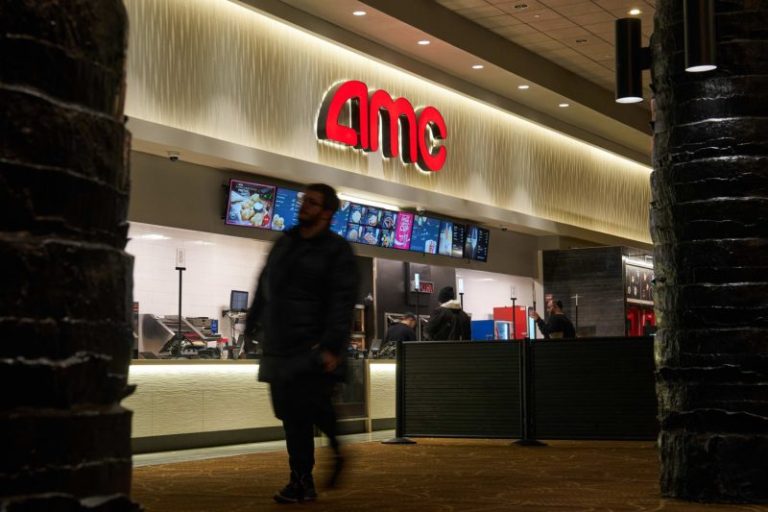
    Hollywood’s blockbuster slate is heating up, and AMC Entertainment is increasing the number of its premium screens to meet demand.

    The world’s largest cinema chain is adding 40 Dolby Cinema theaters to its U.S.-based AMC locations through the end of 2027. It marks a 25% increase in the number of the branded premium screens, bringing the company’s total number to more than 200.

    “Premium moviegoing is defining the modern box office,” said Kevin Yeaman, president and CEO of Dolby Laboratories. “In expanding our longstanding partnership with AMC, we look forward to providing even more audiences with access to the most immersive film experiences that you can only get at Dolby Cinema.”

    The announcement comes just days after AMC revealed a partnership with CJ 4DPLEX to add 65 Screen X auditoriums and 40 4DX theaters to its theaters around the globe.

    Premium large format screens, often referred to as PLFs, are elevated viewing experiences that come with a higher ticket price. The physical screens are often bigger than traditional movie screens or have auditoriums that feature higher-quality sound systems or seating options.

    Dolby Cinemas are specially designed auditoriums with plush, reclining seats and a combination of Dolby Vision and Dolby Atmos, which deliver crisp visuals and immersive sound. Screen X theaters feature a 270-degree panoramic screen that extends the movie image onto the side walls using multi-projection technology, and 4DX is a premium experience that features gyroscopic seats and practical effects like fog, water and wind that play in time with the movie.

    The films that benefit the most from PLF ticket sales have been Hollywood’s biggest blockbusters, as audiences want to see explosive action movies and dazzling spectacles in the most state-of-the-art locations. It’s why films like Universal’s “Oppenheimer,” Disney’s “Avatar: The Way of Water” and Warner Bros.′ “Dune” and “Dune: Part Two” captured a significant portion of the PLF box office during their runs.

    The 2025 and 2026 box offices are packed with blockbuster features from major franchises like Avatar, Star Wars, Jurassic Park, the Marvel Cinematic Universe, DC comics and Mission Impossible.

    “The expansion of this partnership is a powerful demonstration of AMC’s ongoing commitment to deliver this premium experience — sought out by filmmakers, studio partners, and our guests — to even more of our theaters and AMC moviegoers around the United States,” Adam Aron, AMC’s CEO, said in a statement Monday about the Dolby expansion.

    As of 2024, there were more than 950 theaters in North America that had PLF screens, a 33.7% jump from just five years ago, according to data from Comscore. These screens accounted for 9.1% of the domestic box office, around $600 million in 2024.

    Premium ticket prices average just under $17 apiece, according to movie data firm EntTelligence, an 8% increase since 2021, when the company first started reporting these figures.

    PLF receipts still represent a small portion of the overall box office, with most audiences seeing films on traditional digital screens. However, the PLF box office has grown 33% in just five years.

    Disclosure: Comcast is the parent company of NBCUniversal and CNBC.

    This post appeared first on NBC NEWS

    Amazon on Monday released a new AI model that can take actions in a web browser on a user’s behalf, a move that puts it in more direct competition with OpenAI, Anthropic and other companies that have developed the so-called “agents.”

    The new model, called Nova Act, is designed to help developers build agents, or AI software that can complete multi-step tasks for users without supervision. Amazon showed Nova Act searching for “apartments by biking distance to the train station” as one example of a task it can complete.

    A growing number of companies are building AI agents as they look beyond text and image generators.

    Anthropic, the Amazon-backed AI startup founded by ex-OpenAI research executives, released its Computer Use tool in October. The startup said the tool can interpret what’s on a computer screen, select buttons, enter text, navigate websites and execute tasks through any software and real-time internet browsing.

    In January, OpenAI released a similar feature called Operator that will automate tasks such as planning vacations, filling out forms, making restaurant reservations and ordering groceries. The Microsoft-backed startup described Operator as “an agent that can go to the web to perform tasks for you.”

    OpenAI followed up that release in February with another tool called Deep Research, which allows an AI agent to compile complex research reports and analyze questions and topics of the user’s choice. 

    Google launched a similar tool of the same name last December, which acts as a “research assistant, exploring complex topics and compiling reports on your behalf.”

    Nova Act is initially launching in research preview for developers, Amazon said. The company is also launching a website that lets users experiment with its Nova AI models.

    The release is part of a broader strategy within Amazon to invest heavily in generative AI software. Amazon has introduced a flurry of AI products, including its own set of Nova models, Trainium chips, shopping and health assistants, as well as a marketplace for third-party models called Bedrock. It’s also overhauling Alexa, the digital assistant it launched more than a decade ago, with AI capabilities.

    Earlier this month, Amazon’s cloud unit said it’s forming a group dedicated to developing agentic AI that’s being led by longtime Amazon Web Services executive Swami Sivasubramanian. It’s also created an internal team focused on building artificial general intelligence, or AGI, which broadly refers to AI that is as smart or smarter than humans. The team reports directly to Amazon CEO Andy Jassy.

    This post appeared first on NBC NEWS

    (TheNewswire)

    TORONTO, ON TheNewswire – March 31, 2025 Silver Crown Royalties Inc. ( Cboe: SCRI, OTCQX: SLCRF, BF: QS0 ) (‘ Silver Crown ‘, ‘ SCRi ‘, or the ‘ Company ‘) is pleased to provide an update on its non-brokered offering of units (‘Units ‘) that was previously announced on February 6, 2025 (the ‘ Offering ‘).

    In connection with the Offering, the Company has successfully closed the second tranche (‘ Second Tranche ‘) and issued 75,310 Units at a price of C$6.50 per Unit, for gross proceeds of approximately C$489,515. Each Unit consists of one common share (‘ Common Share ‘) and one Common Share purchase warrant (‘ Warrant ‘), with each Warrant exercisable to acquire one additional Common Share at an exercise price of C$13.00 for a period of three years from the closing date.  The total units issued under this Offering total 142,848 for cumulative gross proceeds of C$928,512.

    The proceeds from the Second Tranche will be used to partially fund the second tranche of the Company’s silver royalty acquisition on the Igor 4 project in Peru, as well as general and administrative expenses. All securities issued are subject to a statutory hold period of four months plus one day from the date of issuance, in accordance with applicable securities legislation. The closing was subject to customary conditions, including the approval of Cboe Canada Inc.

    ABOUT Silver Crown Royalties INC.

    Founded by industry veterans, Silver Crown Royalties ( Cboe: SCRI | OTCQX: SLCRF | BF: QS0 ) is a publicly traded, silver royalty company. Silver Crown (SCRi) currently has four silver royalties of which three are revenue-generating. Its business model presents investors with precious metals exposure that allows for a natural hedge against currency devaluation while minimizing the negative impact of cost inflation associated with production. SCRi endeavors to minimize the economic impact on mining projects while maximizing returns for shareholders. For further information, please contact:

    Silver Crown Royalties Inc.

    Peter Bures, Chairman and CEO

    Telephone: (416) 481-1744

    Email: pbures@silvercrownroyalties.com

    FORWARD-LOOKING STATEMENTS

    This release contains certain ‘forward looking statements’ and certain ‘forward-looking information’ as defined under applicable Canadian and U.S. securities laws. Forward-looking statements and information can generally be identified by the use of forward-looking terminology such as ‘may’, ‘will’, ‘should’, ‘expect’, ‘intend’, ‘estimate’, ‘anticipate’, ‘believe’, ‘continue’, ‘plans’ or similar terminology. The forward-looking information contained herein is provided for the purpose of assisting readers in understanding management’s current expectations and plans relating to the future. Readers are cautioned that such information may not be appropriate for other purposes. Forward-looking statements and information include, but are not limited to, the proceeds from the Second Tranche will be used to partially fund the second tranche of the Company’s silver royalty acquisition on the Igor 4 project in Peru, as well as general and administrative expenses. Forward-looking statements and information are based on forecasts of future results, estimates of amounts not yet determinable and assumptions that, while believed by management to be reasonable, are inherently subject to significant business, economic and competitive uncertainties and contingencies. Forward-looking information is subject to known and unknown risks, uncertainties and other factors that may cause the actual actions, events or results to be materially different from those expressed or implied by such forward-looking information, including but not limited to: the impact of general business and economic conditions; the absence of control over mining operations from which SCRi will purchase gold and other metals or from which it will receive royalty payments and risks related to those mining operations, including risks related to international operations, government and environmental regulation, delays in mine construction and operations, actual results of mining and current exploration activities, conclusions of economic evaluations and changes in project parameters as plans continue to be refined; accidents, equipment breakdowns, title matters, labor disputes or other unanticipated difficulties or interruptions in operations; SCRi’s ability to enter into definitive agreements and close proposed royalty transactions; the inherent uncertainties related to the valuations ascribed by SCRi to its royalty interests; problems inherent to the marketability of gold and other metals; the inherent uncertainty of production and cost estimates and the potential for unexpected costs and expenses; industry conditions, including fluctuations in the price of the primary commodities mined at such operations, fluctuations in foreign exchange rates and fluctuations in interest rates; government entities interpreting existing tax legislation or enacting new tax legislation in a way which adversely affects SCRi; stock market volatility; regulatory restrictions; liability, competition, the potential impact of epidemics, pandemics or other public health crises on SCRi’s business, operations and financial condition, loss of key employees. SCRi has attempted to identify important factors that could cause actual results to differ materially from those contained in forward-looking statements, there may be other factors that cause results not to be as anticipated, estimated or intended. There can be no assurance that such statements will prove to be accurate, as actual results and future events could differ materially from those anticipated in such statements. Accordingly, readers are advised not to place undue reliance on forward-looking statements or information. SCRi undertakes no obligation to update forward-looking information except as required by applicable law. Such forward-looking information represents management’s best judgment based on information currently available.

    This document does not constitute an offer to sell, or a solicitation of an offer to buy, securities of the Company in Canada, the United States or any other jurisdiction. Any such offer to sell or solicitation of an offer to buy the securities described herein will be made only pursuant to subscription documentation between the Company and prospective purchasers. Any such offering will be made in reliance upon exemptions from the prospectus and registration requirements under applicable securities laws, pursuant to a subscription agreement to be entered into by the Company and prospective investors. There can be no assurance that forward-looking statements will prove to be accurate, as actual results and future events could differ materially from those anticipated in such statements. Accordingly, the reader is cautioned not to place undue reliance on forward-looking statements.

    CBOE CANADA DOES NOT ACCEPT RESPONSIBILITY FOR THE ADEQUACY OR ACCURACY OF THIS NEWS RELEASE.

    Copyright (c) 2025 TheNewswire – All rights reserved.

    News Provided by TheNewsWire via QuoteMedia

    This post appeared first on investingnews.com

    This week brought a fresh set of challenges to the tech sector, beginning with an announcement from the US Bureau of Industry and Security on Tuesday (March 25) of new export restrictions targeting 80 companies across Asia and the Middle East, impacting some of Big Tech’s key customers.

    Consumer confidence weakened, further dampening market sentiment.

    This was evidenced by the release of the Conference Board’s Consumer Confidence Index report on Tuesday, and the University of Michigan’s consumer sentiment survey, released on Friday (March 28).

    Also on Friday, the latest US personal consumption expenditures price index data showed underlying inflation rising by 0.4 percent, renewing concerns over stagflation.

    Combined, the latest data weighed on equities, and tech stocks led a broad market selloff on March 28 (Friday).

    NVIDIA (NASDAQ:NVDA) ended the week 8.52 percent lower from its opening price on Monday (March 24), Meta Platforms (NASDAQ:META) logged losses of 6.22 percent and Microsoft (NASDAQ:MSFT) declined by 4.2 percent.

    Meanwhile, Apple’s (NASDAQ:AAPL) share price pulled back by a modest 1.41 percent for the week.

    Tesla (NASDAQ:TSLA) saw its price stage a bit of a recovery, ending the week 2.12 percent above Monday’s opening price, while other automotive companies like Ford Motor (NYSE:F) and General Motors (NYSE:GM) nursed losses following US President Donald Trump’s implementation of a 25 percent tariff on all auto imports.

    Here’s a look at other key events that made tech headlines this week.

    1. BYD shares Q4 results, Tesla sentiment improves

    BYD (OTC Pink:BYDDF,SZSE:002594), China’s top car brand, reported its fourth quarter results on Monday, with net profits totaling 15 billion yuan (US$2.1 billion), a 73.1 percent increase compared to the previous year, and revenue growth of 52.7 percent to 274.85 billion yuan (US$37.89 billion) for the same period.

    Looking ahead, BYD expects to ship up to 5.5 million vehicles in 2025.

    The company also said this week that 500 of the approximately 4,000 super-fast charging stations needed to support its electric vehicle (EV) infrastructure in China will be ready by April.

    These projections from BYD come as rival EV maker Tesla staged a partial comeback this week after suffering a roughly 25 percent decline in its share price earlier this month.

    Investor sentiment may have been lifted by analysis from CFRA Research analyst Garrett Nelson, who said Tesla is the “least exposed” to Trump’s sweeping 25 percent automobile tariffs, announced on Wednesday (March 26).

    According to Nelson, Tesla, which builds its cars in the US, stands to benefit from a projected reduction in consumer choices coupled with an increase in the prices of foreign-made vehicles.

    “There are very few winners,” Sam Fiorani, vice president of global vehicle forecasting for AutoForecast Solutions, said in an interview with Bloomberg. “Consumers will be losers because they will have reduced choice and higher prices.”

    Analysts are projecting that Trump’s auto tariffs could severely impact the economy.

    “I think yesterday’s [tariff announcement on automobiles] is a bigger deal than the market is making it out to be,’ Ajay Rajadhyaksha, global chairman of research at Barclays, told CNBC on Thursday (March 27). ‘I think it reduces the risk that April 2 is something that markets can dismiss,’ he added. ‘I think we will be negatively surprised.’

    2. Big Tech companies make AI advances

    This week also saw significant advancements in artificial intelligence (AI) image generation and reasoning with the introduction of enhanced product offerings from some of Big Tech’s most prominent players.

    OpenAI released 4o Image Generation to replace DALL-E 3 as the default image generation model for ChatGPT.

    According to the company, the model can generate more realistic images than older image-generating models, as well as create lengthy, detailed, and precise text strings within images.

    Meanwhile, Microsoft unveiled ‘deep reasoning agents’ for 365 Copilot, powered by OpenAI’s o1 and o3-mini models, featuring ‘agent flow’ for enhanced reliability. Elsewhere, Google’s (NASDAQ:GOOGL) DeepMind introduced Gemini 2.5 Pro, which it claims has superior reasoning capabilities over older iterations and competing models

    3. CoreWeave downsizes IPO

    CoreWeave’s initial public offering (IPO) journey concluded on Friday, following significant market scrutiny.

    The company initially filed for a New York IPO on March 3, targeting a US$4 billion raise and a valuation exceeding US$35 billion. Its filings revealed US$1.9 billion in 2024 revenue but also substantial debt and escalating net losses, reaching US$863 million. This expansion was fueled by US$14.5 billion in debt and equity financing.

    On March 20, CoreWeave announced the launch of its IPO, registering 49 million Class A shares with a projected price range of US$47 to US$55. The company was aiming to raise up to US$2.7 billion in an offering led by Morgan Stanley (NYSE:MS), JPMorgan (NYSE:JPM) and Goldman Sachs (NYSE:GS), with 11 other advisers participating. Analysts at CNBC projected the deal would value CoreWeave at US$26.5 billion, although that figure could go as high as US$32 billion.

    However, the company opted to decrease the size and price of its IPO, setting levels at US$40 per share for 37,500,000 shares, resulting in a valuation of approximately US$23 billion.

    CoreWeave’s lower IPO was due to a confluence of factors that dampened investor enthusiasm, including market conditions and financial concerns. A confidential investor survey reported by the Information found that 90 percent of respondents do not consider CoreWeave a favorable long-term investment.

    “One respondent summed up a broader perception about CoreWeave: ‘It’s radioactive, and I think every investor knows that,’” market analyst Cory Weinberg wrote.

    4. OpenAI revenue and funding rumors circulate

    It was a big week for OpenAI, marked by reports on its expansion and projected financial growth.

    According to a Wednesday report from the Information, OpenAI is exploring the construction of its first data center, which would be located in Texas near the Stargate data center site.

    Concurrently, Bloomberg cited an anonymous source projecting OpenAI’s revenue to potentially triple to US$12.7 billion this year and reach $29.4 billion in 2026, driven by its paid software plans. Additionally, reports surfaced of a record-breaking funding round worth US$40 billion led by Stargate co-contributor SoftBank Group (TSE:9984). The deal is reportedly near completion and would double OpenAI’s valuation, bringing it near US$300 billion.

    These developments emphasize OpenAI’s position as a dominant force in the AI landscape

    5. Microsoft reportedly cuts data center plans

    Shares of Microsoft closed down on Wednesday after an analyst note from TD Cowen alleged that the tech conglomerate had abandoned plans for new data centers in the US and Europe, citing potential oversupply.

    According to Bloomberg, Google and Meta have taken over some of the affected leases, although neither company has responded publicly to the note. In a statement from Microsoft obtained by the publication, the company said “significant investments” have left it “well positioned to meet our current and increasing customer demand.”

    “While we may strategically pace or adjust our infrastructure in some areas, we will continue to grow strongly in all regions,” the spokesperson said. “This allows us to invest and allocate resources to growth areas for our future.”

    Securities Disclosure: I, Meagen Seatter, hold no direct investment interest in any company mentioned in this article.

    This post appeared first on investingnews.com

    Here’s a quick recap of the crypto landscape for Friday (March 28) as of 9:00 p.m. UTC.

    Bitcoin and Ethereum price update

    Bitcoin (BTC) is currently trading at US$83,780.06, a 3.7 percent decrease over the past 24 hours. The day’s trading range has seen a low of US$83,609.35 and a high of US$85,503.88.

    Bitcoin performance, March 28, 2025.

    Chart via TradingView.

    Deribit’s US$16 billion Bitcoin options expiry on Friday had US$75,000 max pain, down from the projected US$85,000, and a 0.58 put/call ratio. There was a high amount of call option open interest at the US$100,000 strike price.

    Bitcoin’s subsequent decline indicates post-expiry market adjustments.

    Ethereum (ETH) is priced at US$1,875.25, a 6.4 percent decrease over 24 hours. The cryptocurrency reached an intraday low of US$1,866.54 and a high of US$1,900.19.

    Altcoin price update

    • Solana (SOL) is currently valued at US$129.44, down 6.9 percent over the past 24 hours. SOL experienced a low of US$129.17 and a high of US$131.56 on Friday.
    • XRP is trading at US$2.18, reflecting a 6.9 percent decrease over the past 24 hours. The cryptocurrency recorded an intraday low of US$2.16 and a high of US$2.22.
    • Sui (SUI) is priced at US$2.49, showing a 9.7 percent decrease over the past 24 hours. It achieved a daily low of US$2.49 and a high of US$2.56.
    • Cardano (ADA) is trading at US$0.6961, reflecting a 5.2 percent decrease over the past 24 hours. Its lowest price on Friday was US$0.66925, with a high of US$0.7031.

    Crypto news to know

    SEC onboards Musk’s DOGE team members

    Reuters reported that the US Securities and Exchange Commission (SEC) has begun onboarding members from Elon Musk’s Department of Government Efficiency (DOGE) team.

    “Our intent will be to partner with the DOGE representatives and cooperate with their request following normal processes for ethics requirements, IT security or system training, and establishing their need to know before granting access to restricted systems and data,” said an email to SEC staff, according to Reuters.

    Atkins questioned at Senate confirmation hearing

    SEC nominee Paul Atkins testified before the Senate Banking Committee on Thursday (March 27).

    During the hearing, he was questioned by Senate lawmakers regarding the sale of his consulting firm, Patomak Global Partners, which advised bankrupt cryptocurrency exchange FTX.

    “Your clients pay you north of US$1,200 an hour for advice on how to influence regulators like the SEC, and if you’re confirmed, you will be in a prime spot to deliver for all those clients who’ve been paying you millions of dollars for years,” said Senator Elizabeth Warren during the hearing. She also requested that he disclose the firms potential buyers, whom she suggested may “buying access to the future chair of the SEC.’

    Atkins said he will abide by the process of government ethics, but did not directly answer Warren’s question.

    Senator John Kennedy also grilled Atkins about whether he will pursue the parents of FTX founder Sam Bankman-Fried, who Kennedy alleges may have been involved in and profited from his business affairs. Kennedy said if his position with the SEC is confirmed, he would “pounce on you like a ninja” to investigate the matter further.

    UAE set to launch Digital Dirham CBDC

    The United Arab Emirates is moving forward with its central bank digital currency (CBDC) plans, announcing that the Digital Dirham will be launched for retail use by the last quarter of 2025, the Khaleej Times reported.

    The Central Bank of the United Arab Emirates has developed an integrated Digital Dirham platform that will support retail, wholesale and cross-border transactions.

    The CBDC will be accessible through licensed financial institutions, including banks, fintech firms and exchange houses, and will be accepted alongside physical cash across all payment channels.

    This initiative follows the United Arab Emirates’ efforts to regulate stablecoins and aligns with global trends, as countries like China, Russia and Sweden also push forward with CBDC pilot programs.

    The United Arab Emirates’ Digital Dirham is expected to enhance financial security, streamline transactions and provide regulatory oversight beyond what private stablecoins can offer.

    UK regulator plans to enforce stricter crypto authorization regime

    The UK’s Financial Conduct Authority (FCA) announced that it will introduce a new authorization framework for crypto firms in 2026, significantly increasing regulatory scrutiny in the sector.

    Under the proposed ‘gateway regime,’ crypto companies, including major exchanges such as Coinbase and Gemini, will need to obtain authorization to operate beyond existing anti-money laundering (AML) requirements.

    The FCA has been tightening its oversight, with only 50 out of 368 applicants successfully registering under its AML framework since 2020. Upcoming consultations will define which crypto activities require authorization, with a focus on stablecoins, trading platforms and staking services.

    Industry participants have just over a year to prepare for these stricter compliance measures, which are expected to reshape the regulatory landscape for digital assets in the UK.

    BlackRock expands Bitcoin ETP to Europe

    BlackRock has launched its iShares Bitcoin exchange-traded product (ETP) in Europe, making it available on major exchanges like Xetra, Euronext Amsterdam and Euronext Paris.

    This expansion is a significant milestone for institutional Bitcoin adoption in the region, following the success of BlackRock’s US-based iShares Bitcoin Trust ETF, which has accumulated over US$49 billion in assets.

    However, analysts believe that demand for the European ETP will be more muted, citing differences in market structure, investor appetite and regulatory clarity.

    While Bitcoin exchange-traded funds (ETFs) in the US have benefited from deep institutional participation, the European market is still developing. Experts suggest that BlackRock’s entry into Europe could encourage further institutional involvement, but widespread adoption may take time as regulatory frameworks evolve.

    Nasdaq files to list Grayscale’s spot Avalanche ETF

    Nasdaq is seeking permission from the SEC to list Grayscale Investments’ spot Avalanche ETF. The proposed AVAX ETF would be a conversion of Grayscale Investments’ close-ended AVAX fund launched in August 2024, which currently holds around US$1.76 million worth of assets under management.

    Securities Disclosure: I, Giann Liguid, hold no direct investment interest in any company mentioned in this article.

    Securities Disclosure: I, Meagen Seatter, hold no direct investment interest in any company mentioned in this article.
    This post appeared first on investingnews.com

    President Donald Trump commuted the criminal sentence of Ozy Media founder Carlos Watson on Friday, just hours before Watson was due to begin serving a 116-month prison term for a multi-million-dollar scheme that included falsely claiming the start-up had deals with Google and Oprah Winfrey, a senior White House official said.

    Watson had expected to surrender Friday afternoon to the Federal Correctional Institution in Lompoc, California, before he received word of Trump granting him executive clemency, according to a source familiar with the situation.

    Trump also commuted the sentence of one year of probation imposed on Ozy Media for the defunct news and entertainment company’s conviction in the same case.

    Trump’s actions remove the criminal penalty imposed on Watson and Ozy.

    Watson, 55, was convicted at trial in Brooklyn federal court last July of conspiracy to commit securities fraud, conspiracy to commit wire fraud, and aggravated identity theft. He was sentenced in December.

    In February, a federal judge ordered Watson and Ozy to pay almost $60 million in forfeiture and more than $36 million in restitution.

    Watson’s defense attorney, Arthur Aidala, declined to comment Friday when contacted by CNBC.

    A spokesman for the Brooklyn U.S. Attorney’s Office, which prosecuted Watson, also declined to comment on the commutation of his sentence.

    Glenn Martin, a criminal justice reform advocate, in a tweet on Friday wrote, “We did it,” above a photo of him and Watson.

    “President Trump commuted the sentences of Ozy Media and Carlos Watson hours before his surrender,” the tweet said.

    ″@CarlosWatson is not going to prison today,” Martin wrote.

    “First and foremost, thank God for His grace, mercy and the power of redemption. A very special note of appreciation to @AliceMarieFree,” he added, referring to his fellow criminal justice reform advocate Alice Marie Johnson.

    “Your advocacy, compassion, and relentless pursuit of fairness have made this moment possible for people like Carlos.”

    When Watson was sentenced, then-Brooklyn U.S. Attorney Breon Peace said, “Carlos Watson orchestrated a years-long, audacious scheme to defraud investors and lenders to his company, Ozy Media, out of tens of millions of dollars.”

    Prosecutors said that Watson and his co-conspirators between 2018 and 2021 defrauded investors by misrepresenting Ozy’s financial performance, its ongoing business relationships and its acquisition prospects, as well as its contract negotiations.

    Ozy abruptly shut down in October 2021, after The New York Times reported that the company’s chief operating officer, Samir Rao, had impersonated a YouTube executive on a conference call with Goldman Sachs.

    The investment bank was considering a $40 million investment in Ozy at the time.


    This post appeared first on NBC NEWS

    This week, we get back to earnings and, sadly, the pickings are slim.

    Given these turbulent times, we have two Consumer Staples stocks to examine — Lamb Weston (LW) and Conagra (CAG). They may not be the most exciting charts, but they show clear levels of interest that are worth noting.

    There’s also the highly volatile stock Restoration Hardware (RH), which is trading close to a support level. This stock can be considered a high-risk, high-reward trade.

    Let’s dive in…

    Lamb Weston (LW)

    Lamb Weston, best known for its iconic french fries, has gone on one of the wildest rides over the last four years. After a two-year uptrend, the stock has slowly and steadily gone on a two-year downtrend, giving back all its gains.

    Earnings have been quite harsh over the last four quarters. There was one gain of 2.6%, with three losses that included a -19.4%, a -28.2%, and most recently a -20.1% decline. Shares now sit 54% off of all-time highs as the company heads into Thursday’s earnings report.

    Technically, there is some hope.

    Shares made a full roundabout from trough to peak and back to trough again, where they were able to find some major support. The $47.50/$48 level was the original double bottom that started the rally years ago, and now, when re-tested, it held again.

    The risk/reward set-up appears to favor the bulls, barring another epic post-earnings drawdown. If shares sell off, the $47.50 level should get tested and could be a good entry point. However, the path to least resistance looks higher from this level. A mean reversion back to its long-term downtrend around the declining 200-day simple moving average would be good for a 23% gain.

    Overall shares continue to act rather soggy, but one little quarter could spice things up and lead to a quick and satisfying return.

    Restoration Hardware (RH)

    Restoration Hardware has become one of the most volatile stocks after earnings over the last year-and-a-half and is one to watch with the report on Wednesday afternoon. Shares have moved an average of +/- 17% over the last six reports with gains of 17% and 25.5% over the last two.

    Since last December’s 17% jump after results, the stock has declined as much as 50% from its recent highs. One major factor is the slowdown in the housing market, influenced by rising interest rates, which has dampened demand for home furnishings.

    Technically, shares reached a major support level going back four years and held. It was the fourth time in four years that shares moved towards that $210 level and held. Clearly, we have a major level of interest to watch from a risk/reward set-up.

    Shares hit extreme oversold levels in its relative strength index (RSI) in early March and have finally bounced. The rally back from oversold levels and a hold of key support should favor the bulls for now.

    If you were to trade this into Wednesday afternoon’s earnings, you must watch that support level carefully. It has held time and again, and this would be a great area to dip into the stock with a stop-loss for protection just below support to minimize losses. Any positive reaction could see a fast snapback rally towards the 200-day moving average, which sits 35% above current levels. A simple mean reversion could equate to a nice return, while the stock remains in its longer-term downtrend.

    ConAgra (CAG)

    ConAgra, the parent company of Duncan Hines, Birds Eye, and Slim Jim, has struggled after earnings, as it has fallen five of the last six times it has reported.

    Technically, shares sit in the middle of a range between its 50-day and 200-day moving averages. The consumer staple has held up relatively well compared to the overall market and has only declined -4.5% year-to-date. It pays a 5.3% dividend and is considered a safer haven in these turbulent times.

    The $24.50/$25 level has acted as solid support and could be a good entry point given current market uncertainty. However, the upside has overhead resistance at the 200-day moving average and the $27.50/$28 level.

    Overall, this may be a nice place to hide out during turbulent times, but the overall risk/reward is marginal, at best. It may be more rewarding to eat their products than to trade the stock.